

Rhassoul Clay for Hair and Skin: Benefits & How to Use It
ByTASANO
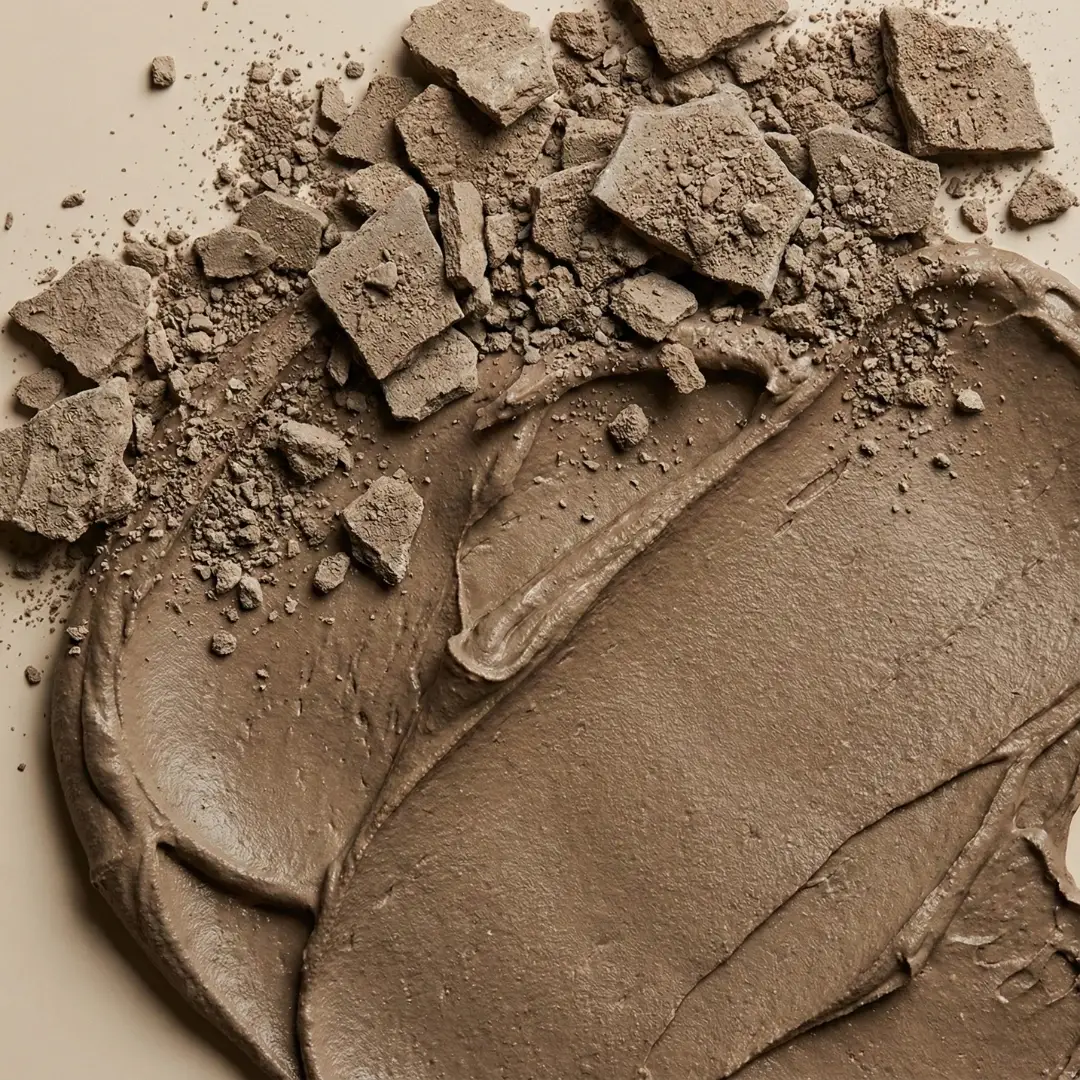
There’s a reason Rhassoul clay has been used in Moroccan beauty rituals for centuries.
Unlike harsh cleansers or synthetic treatments, it works in harmony with the skin and hair—purifying, balancing, and enhancing their natural state.
Rich in minerals and traditionally sourced from the Atlas Mountains, Ghassoul clay is known for its ability to cleanse deeply without stripping, making it a versatile essential for both skincare and haircare.
In this guide, you’ll discover its key benefits, how to use it properly, and how to integrate it into your routine for visible results.
Table of Contents
What Is Rhassoul Clay?
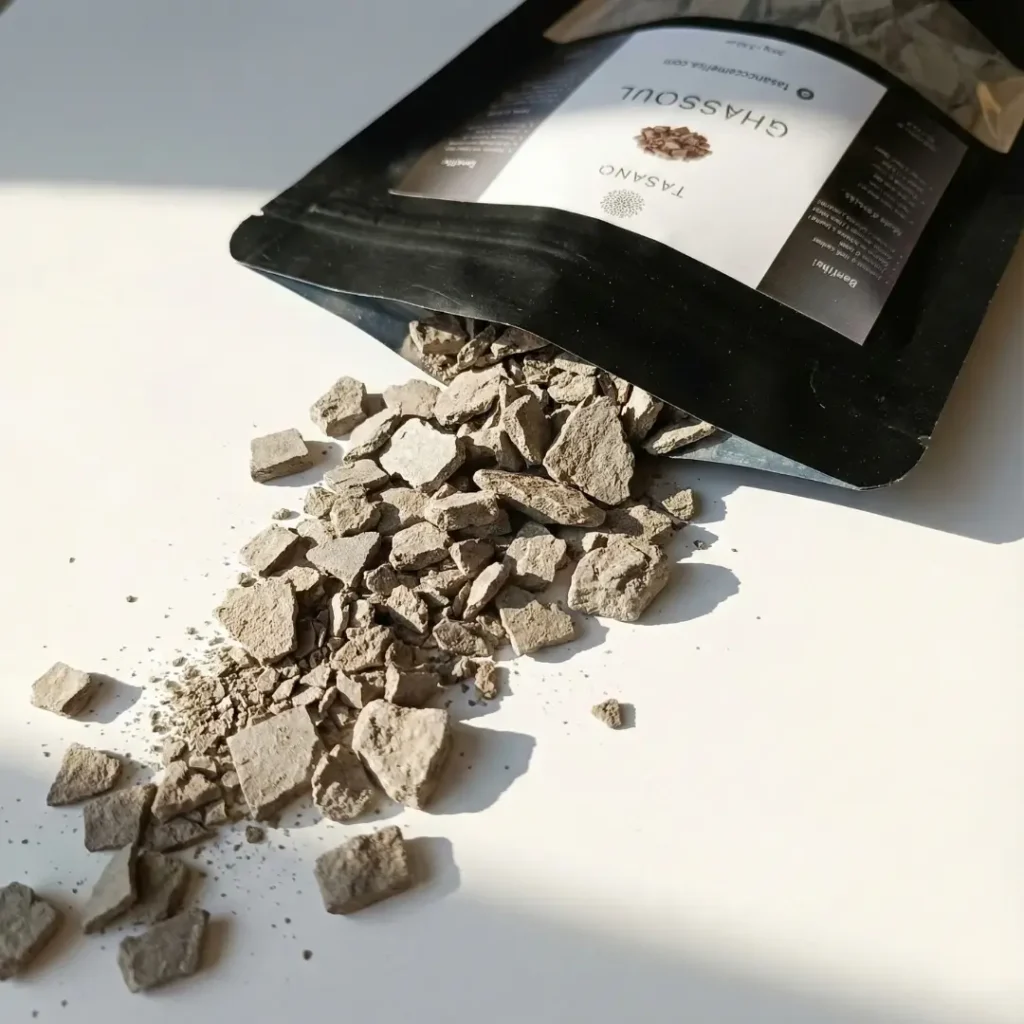
Rhassoul clay (also known as ghassoul clay) is a natural mineral clay found in Morocco.
It is traditionally used in:
- hammam rituals
- facial treatments
- hair cleansing masks
What makes it unique is its natural cleansing ability without foam.
Instead of stripping oils, it:
- absorbs impurities
- balances excess oil
- leaves skin and hair soft and refined
Rhassoul Clay Skin Benefits
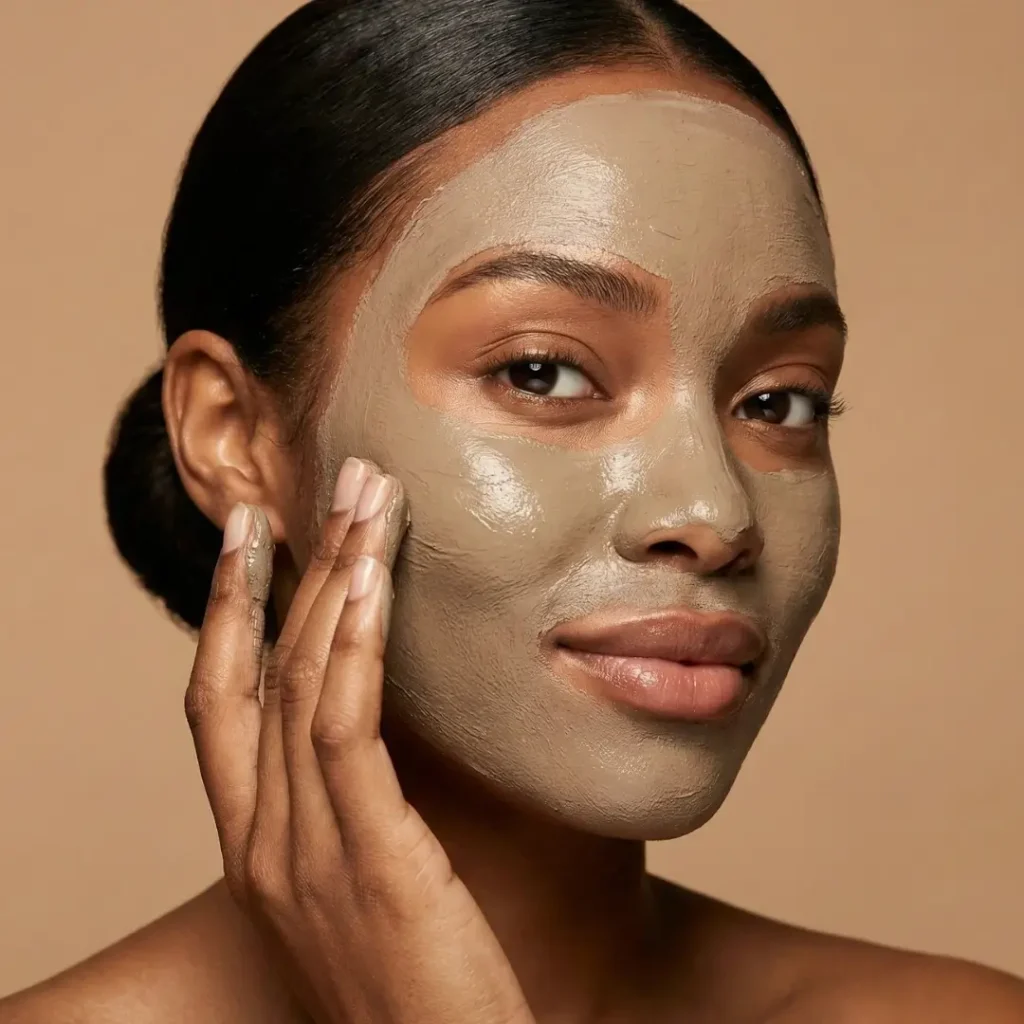
Deeply Cleanses and Purifies
Ghassoul clay helps remove impurities, excess oil, and buildup from the skin.
According to dermatology insights from Cleveland Clinic, mineral clays such us Rhassoul clay mask can support clearer skin by absorbing excess oil and impurities.
Improves Skin Texture and Radiance
Regular use helps:
- smooth uneven texture
- refine pores
- enhance natural glow
Helps Reduce Acne and Breakouts
By cleansing pores and balancing oil, ghassoul clay can support acne-prone skin.
Gentle on the Skin Barrier
Unlike harsh cleansers, Rhassoul clay powder respects the skin’s natural balance.
This makes it suitable for regular use when applied correctly.
Rhassoul Clay Benefits for Hair
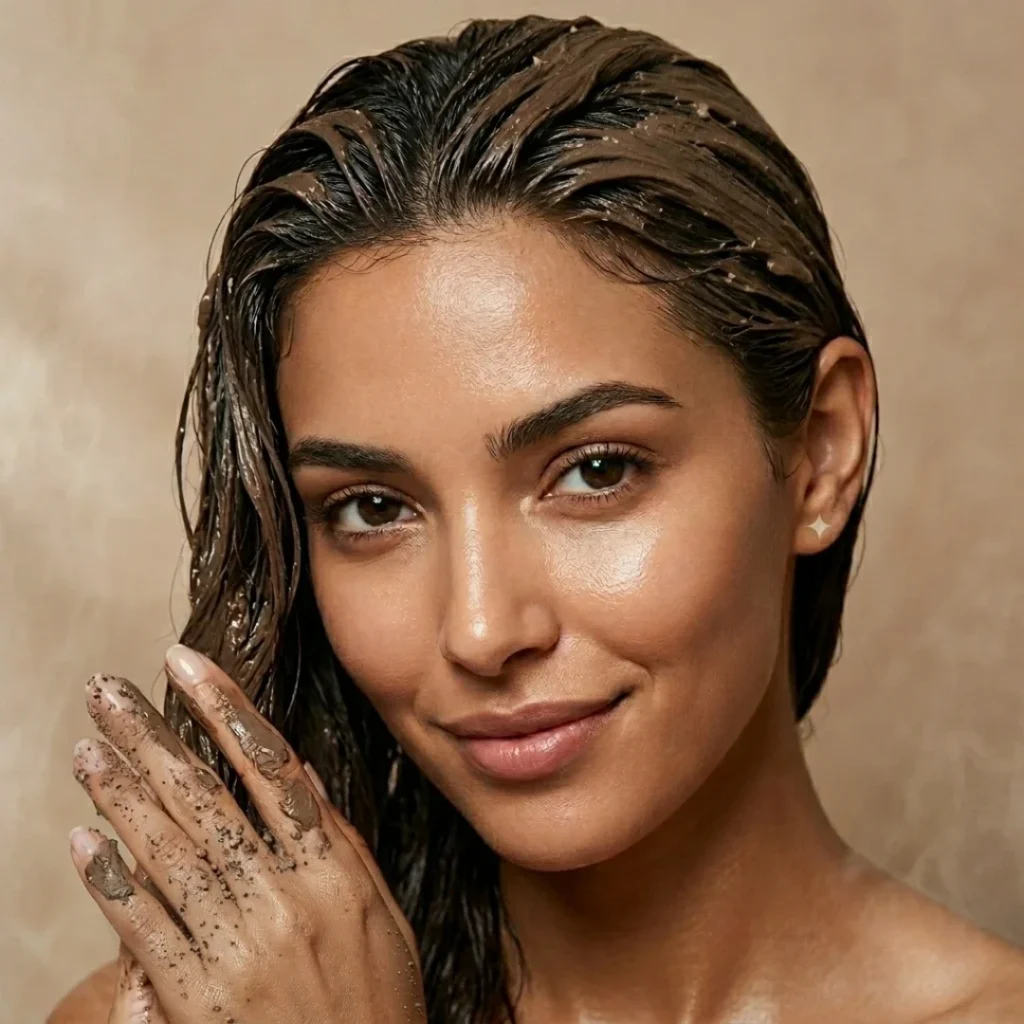
Cleanses the Scalp Without Stripping
Rhassoul clay for hair removes buildup and excess oil while preserving natural moisture.
Adds Softness and Shine
Hair feels:
- softer
- smoother
- more manageable
Ideal for Curly and Natural Hair
It enhances curl definition while maintaining hydration.
Reduces Product Buildup
Especially useful for those using oils or styling products regularly.
How to Use Rhassoul Clay (Step-by-Step)
Step 1 — Mix the Clay
Combine Ghassoul clay with warm water until you get a smooth paste.
Optional:
- Rose water (for skin)
- herbal infusions (for hair)
Step 2 — Apply to Skin or Hair
For skin:
- Apply evenly to face or body
For hair:
- Apply to scalp and lengths
Step 3 — Leave for 5–10 Minutes
Do not let it fully dry or crack.
Step 4 — Rinse Thoroughly
Use lukewarm water to remove completely.
Step 5 — Follow with Hydration
After use:
- Apply Argan oil (skin)
- Use conditioner or oil (hair)
👉 To complete the ritual with lasting softness and hydration, discover how to use Argan oil after shower for skin and hair for the best results.
How Often Should You Use Ghassoul Clay?
- Skin → 1–2 times per week
- Hair → 1 time per week
Overuse can lead to dryness.
Balance is key.
Ghassoul Clay vs Other Clays
| Feature | Ghassoul Clay | Other Clays |
|---|---|---|
| Origin | Morocco | Various |
| Use | Hair + skin | Mostly skin |
| Effect | Cleansing + softening | Often drying |
One of the most noticeable differences with ghassoul clay is how the skin and hair feel after use.
Unlike many clays that leave the skin tight or dry, ghassoul is known for leaving a soft, smooth, almost conditioned finish. This is due to its unique mineral composition, which allows it to cleanse while maintaining a natural level of hydration.
This is also why ghassoul clay is often used not only as a face mask, but as:
- a gentle hair cleanser
- a scalp treatment
- a body purification step in the hammam
For many, the first use is surprising—not because it is harsh, but because it delivers a deep cleanse while still feeling comfortable on the skin.
That balance between purification and softness is what has made ghassoul clay a lasting essential in Moroccan beauty rituals.
How Ghassoul Clay Fits in the Hammam Ritual
Ghassoul clay is traditionally used as the final cleansing step in the Moroccan hammam ritual, applied after the skin has been properly prepared and exfoliated.
The process begins with Moroccan black soap, which helps soften the skin and loosen impurities. If you’re new to this step, explore Moroccan Black Soap Benefits & How to Use It to understand how it prepares the skin for deeper care.
Once the skin is ready, exfoliation is performed using a kessa glove to remove dead skin and refine texture. For best results, follow this guide on how to use a kessa glove properly to ensure a gentle and effective exfoliation.
After these steps, ghassoul clay is applied to cleanse, purify, and rebalance the skin, leaving it soft, smooth, and refreshed.
To experience the full ritual step by step, follow The Complete Moroccan Hammam Ritual at Home.
Why Ghassoul Clay Works: Backed by Skin Science
Natural clays are widely recognized for their ability to absorb impurities, excess oil, and environmental buildup from the skin, helping to maintain a clearer and more balanced complexion. Unlike harsh cleansers that can disrupt the skin barrier, mineral-rich clays such as ghassoul work through a gentle absorption process, drawing out impurities without stripping essential moisture.
Dermatology authorities such as the American Academy of Dermatology emphasize the importance of maintaining the skin’s natural barrier by avoiding over-cleansing and excessive dryness. This is precisely where ghassoul clay stands out—it cleanses effectively while respecting the skin’s balance.
In traditional Moroccan beauty practices, this balance has always been central. Ghassoul clay is not used to aggressively “treat” the skin, but rather to purify and refine it in a way that supports long-term skin health. This approach aligns closely with modern dermatological recommendations that favor gentle, consistent care over harsh or overly frequent treatments.
Best Ghassoul Clay for Real Results (Conversion Section)
Not all Ghassoul clay is equal.
Quality depends on:
- purity
- mineral content
- sourcing
👉 TASANO Rhassoul Clay is selected for authenticity and performance.
✔ 100% natural Moroccan origin
✔ Ideal for both hair and skin
✔ Smooth texture for easy application
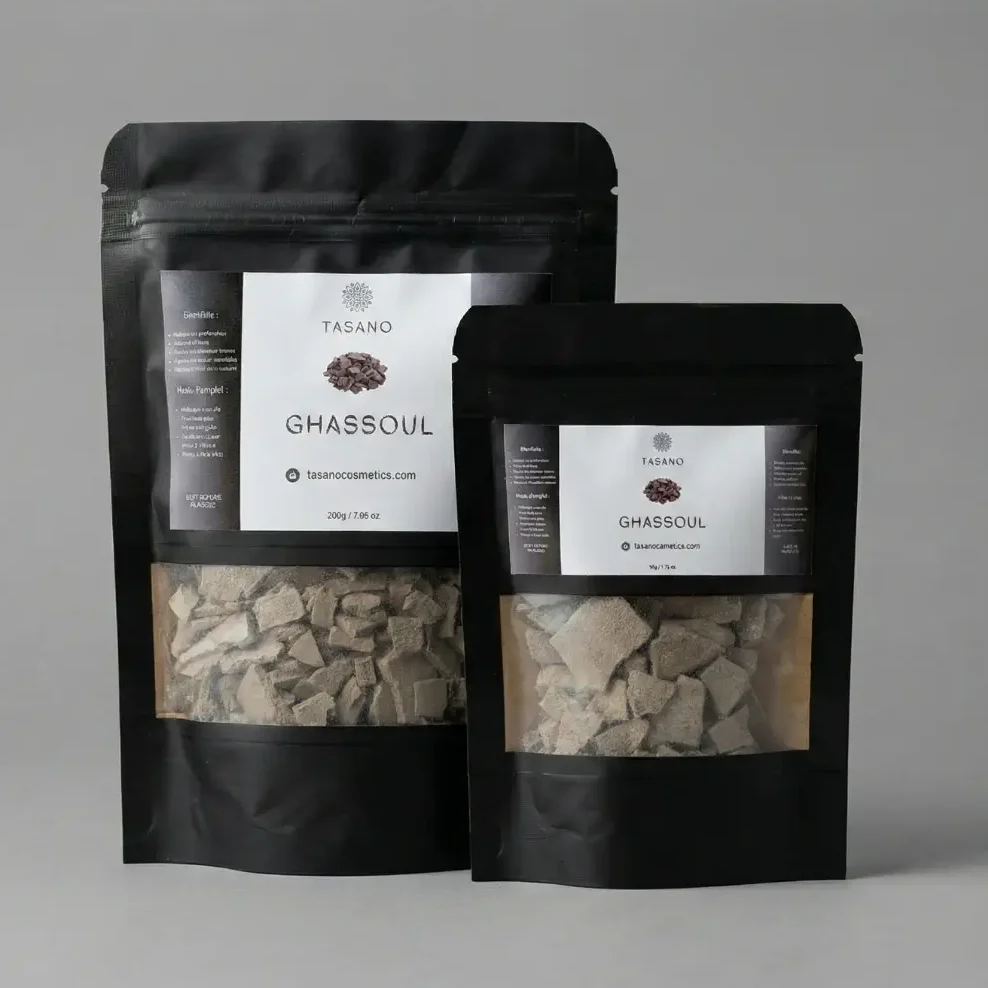
Moroccan Rhassoul (Ghassoul) – Deep Purifying
Moroccan Rhassoul (Ghassoul) Clay Powder – Deep Purifying
FAQ
Is Rhassoul clay good for hair?
Yes, it cleanses without stripping and improves softness.
Is Rhassoul clay good for acne?
It can help by absorbing oil and cleansing pores.
Can Ghassoul clay be used daily?
No, 1–2 times per week is sufficient.
Is Rhassoul clay drying?
It can be if overused or left too long.
Can I use Ghassoul clay on sensitive skin?
Yes, but with shorter application time.
Final Thoughts: A Natural Essential for Hair and Skin
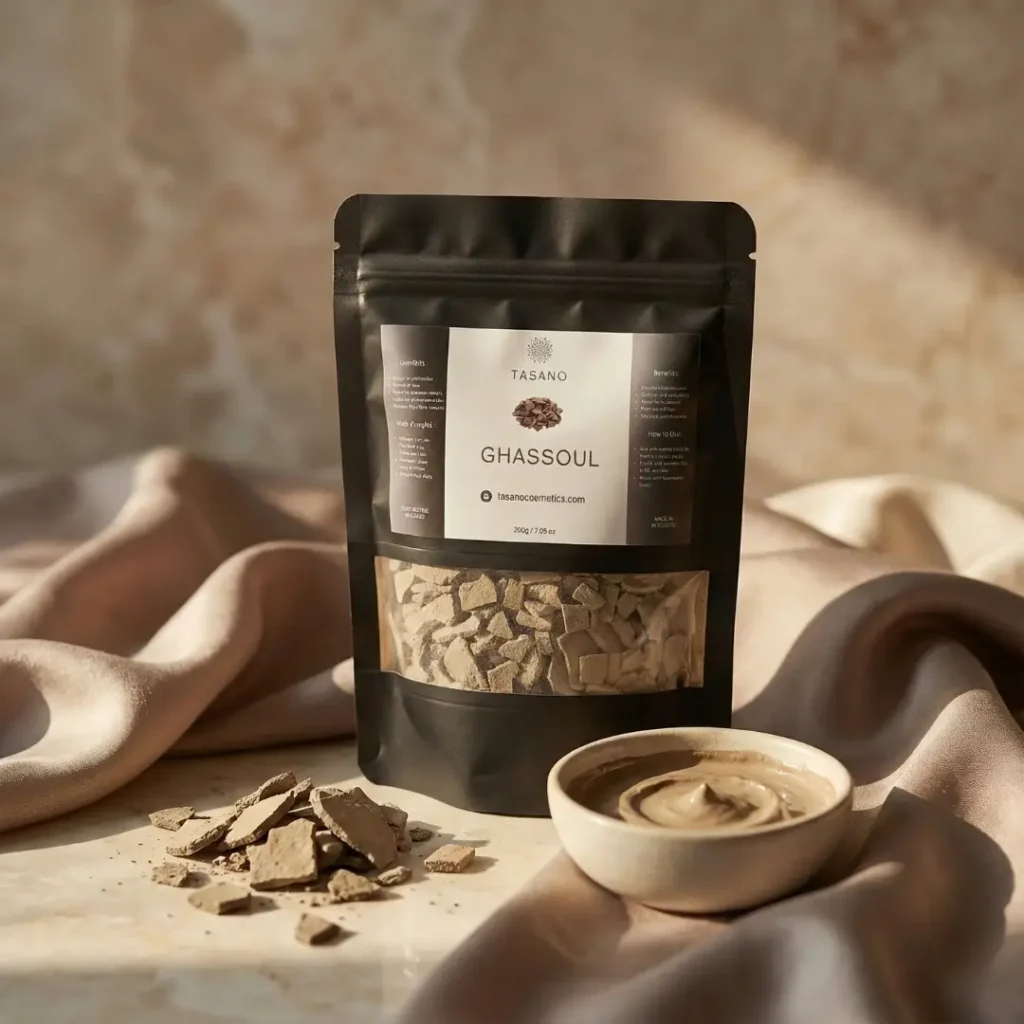
Rhassoul clay is more than a traditional ingredient—it is a complete care step for both skin and hair.
When used correctly, it:
- purifies
- softens
- enhances natural beauty
Integrated into a consistent routine, it offers a simple yet powerful way to care for your skin and hair with authenticity and effectiveness.