

Argan Oil After Shower: Benefits for Skin and Hair
ByTASANO
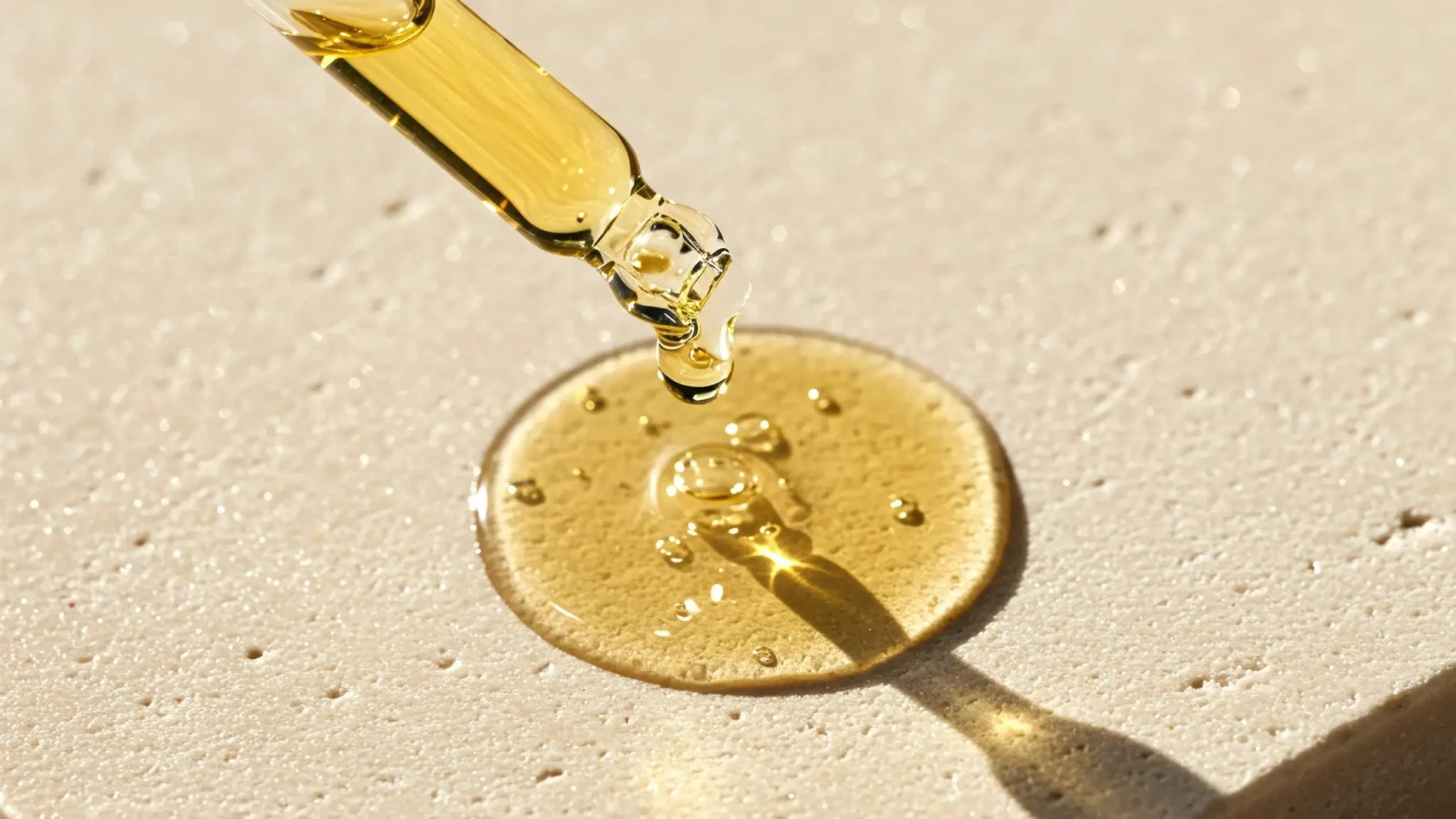
A hammam (traditional Moroccan steam bath) leaves the skin deeply cleansed and freshly exfoliated. It also creates the perfect moment to restore comfort, softness, and hydration.
Argan oil is often the finishing step after The Complete Moroccan Hammam Ritual at Home.
Used after black soap, exfoliation, or ghassoul clay, argan oil helps replenish moisture and leave both skin and hair feeling smooth, nourished, and more refined. Dermatology and medical sources describe argan oil as rich in fatty acids, vitamin E, and other compounds associated with hydration, barrier support, softer hair, and reduced frizz.
In Moroccan beauty rituals, argan oil is not simply an extra step. It is the finishing touch that brings balance back to the skin and hair after cleansing and purification.
Table of Contents
Why Use Argan Oil After Shower?
After a hammam, the skin has been exposed to heat, cleansing, and exfoliation. Hair may also feel more porous or dry after washing or clay treatments. This is why post-hammam care matters.
Argan oil after shower is especially well suited to that step because it helps:
- restore softness
- support moisture retention
- smooth rough texture
- add shine to the hair without a heavy finish
Research and dermatology sources support argan oil’s moisturizing role for skin and its conditioning, frizz-reducing, and protective benefits for hair.
Argan oil is widely valued for its versatility, offering both Argan oil benefits for hair and Argan oil benefits for skin in a single, natural step. It helps nourish and soften the skin after cleansing, while also improving the appearance and manageability of the hair, making it an essential part of a balanced post-shower routine.
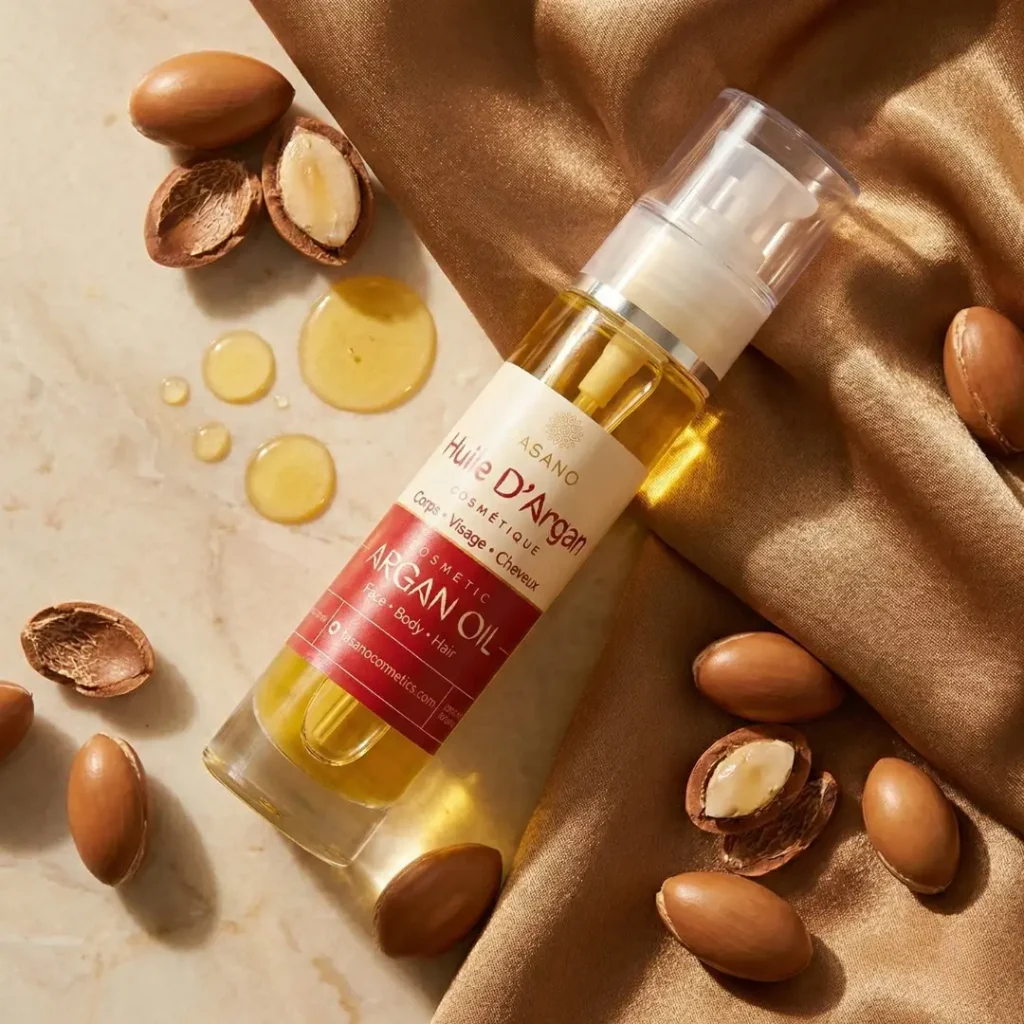
Benefits of Argan Oil After Shower for Skin
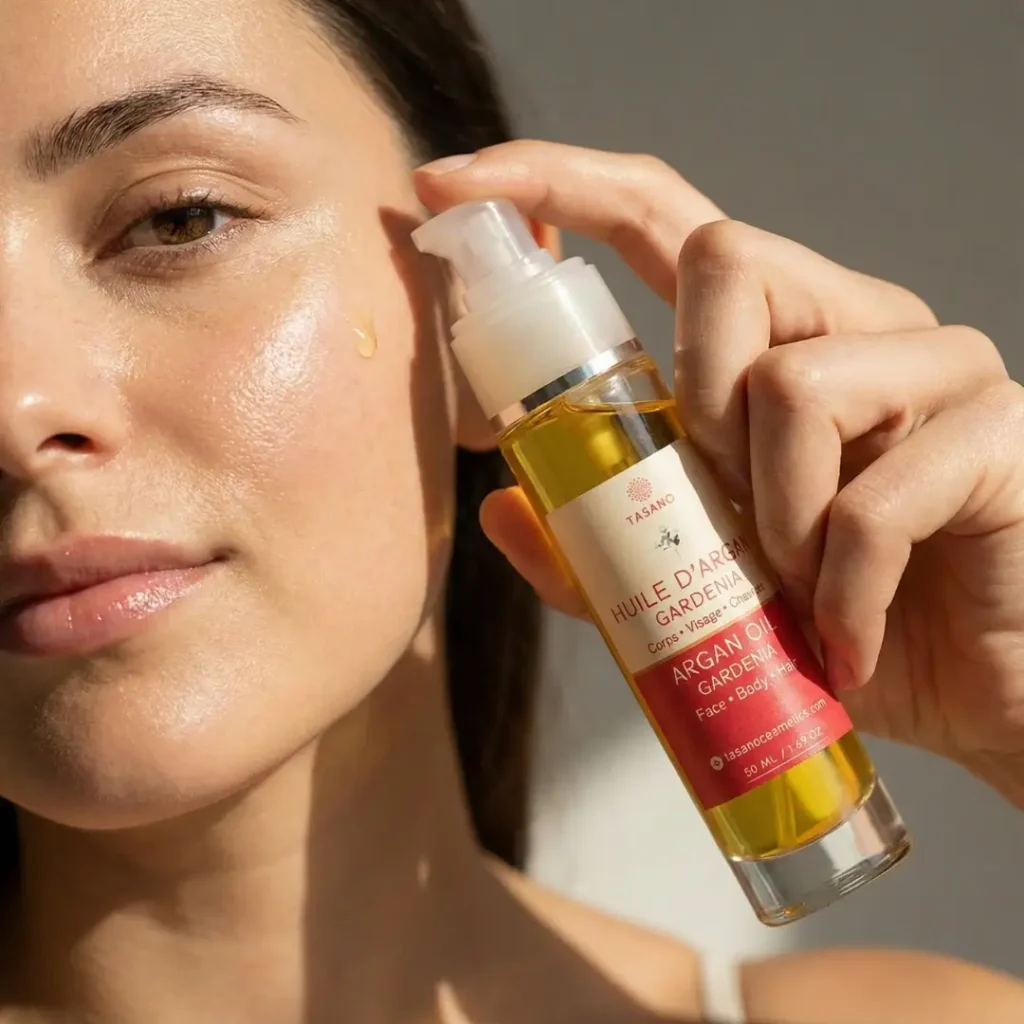
Helps Replenish Moisture After Exfoliation
After black soap and a kessa glove, the skin can feel exceptionally clean but also more in need of nourishment. Argan oil helps seal in softness and support the skin barrier through its fatty acid and vitamin E content. Cleveland Clinic notes that argan oil can hydrate skin and help improve overall texture.
Supports a Softer, Smoother Skin Feel
Freshly exfoliated skin tends to absorb leave-on care more effectively. Applied after hammam, argan oil helps leave the skin supple, smooth, and comfortable rather than tight or dry. Evidence reviews also describe topical argan oil as beneficial for skin hydration and elasticity.
Enhances Natural Radiance
Argan oil does not bleach the skin. What it does is help reduce dryness and improve surface smoothness, which can make skin appear more luminous and healthy. Reviews of argan oil’s cosmetic use describe improvements in skin elasticity and condition that support a more radiant appearance.
Helps Comfort Dry or Tight Skin
Because hammam rituals involve cleansing and exfoliation, they should ideally be followed with barrier-supportive care. Medical sources describe argan oil as helpful for dry skin due to its emollient and anti-inflammatory profile.
For face-focused use, read Moroccan Argan Oil for Face: Benefits, How to Use It & Results to Expect.
Benefits of Argan Oil After Shower for Hair
Helps Reduce Frizz
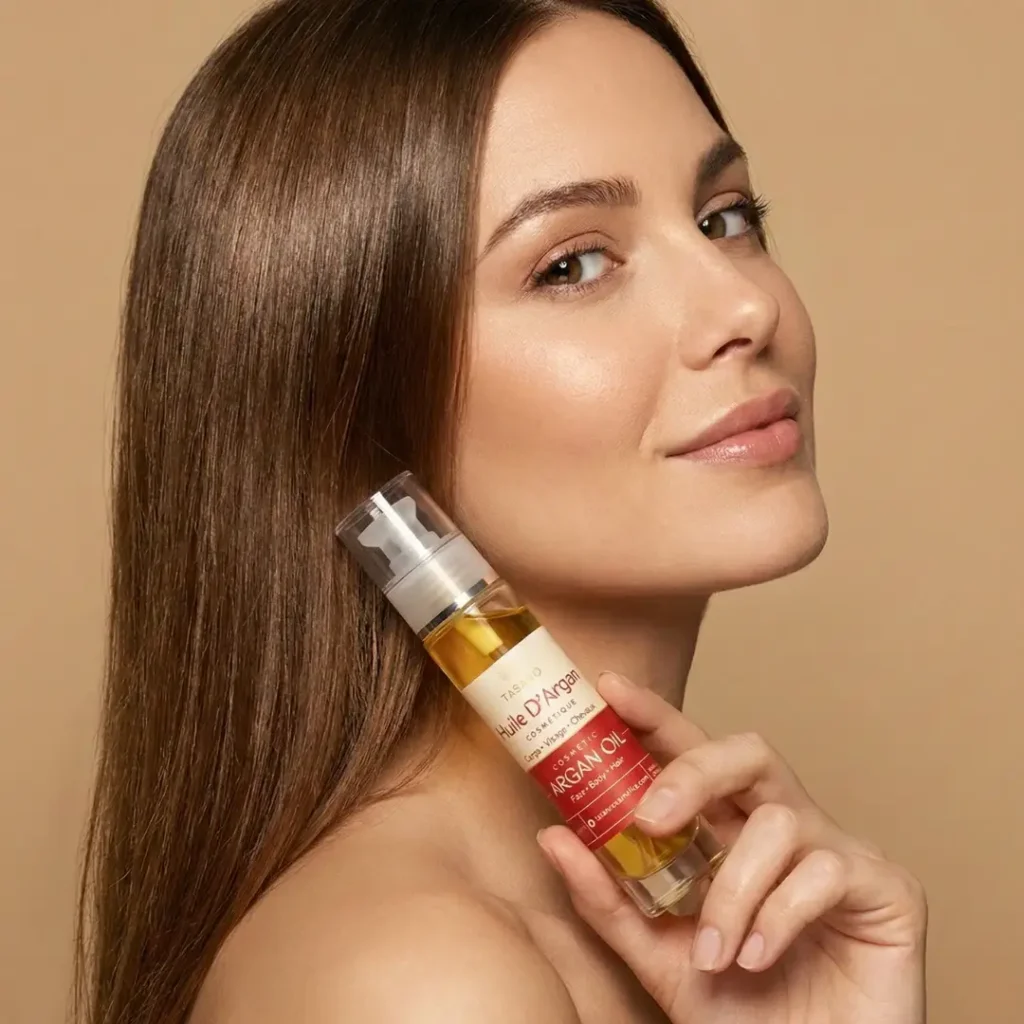
Cleveland Clinic lists frizz reduction among argan oil’s most recognized hair benefits. Applied lightly to the lengths and ends, it can help smooth the hair fiber and improve manageability.
Adds Softness and Shine
Argan oil is widely used as a lightweight finishing oil because it conditions the hair without the heavy feel some oils can leave behind. Reviews note that it can improve the appearance and feel of damaged or dry hair.
Helps Protect Hair from Damage
A study on human hair found argan oil pre-treatment helped protect against oxidative damage, while Cleveland Clinic notes oils like argan can help form a protective layer around the hair and support hair exposed to heat or chemical stress.
Especially Useful for Dry, Curly, or Coarse Hair
AAD guidance for curly hair recommends conditioning ingredients such as argan oil, while Cleveland Clinic notes that drier, coarser hair types tend to benefit more from oiling than fine, oily hair types.
For hair-specific results, explore Argan Oil for Hair: Benefits, How to Use It & Results to Expect.
How to Use Argan Oil After Shower
For the Skin
After rinsing off black soap, exfoliating, or using ghassoul clay, pat the skin lightly so it remains slightly damp. Warm a few drops of argan oil between your hands and apply it over the body using smooth, even motions.
Focus especially on:
- arms
- legs
- elbows
- knees
- any areas prone to dryness
Applying Argan oil after shower or washing helps trap moisture already present on the skin.
For the Hair
Apply a small amount to the mid-lengths and ends of damp or dry hair. Use only what the hair can absorb.
For best results:
- start with a few drops
- avoid over-applying to fine hair
- focus on dry ends and frizz-prone sections
AAD and Cleveland Clinic both describe argan oil as a useful leave-in support for dry, frizzy, or textured hair when used in moderation.
For a More Nourishing Overnight Ritual
Argan oil can also be applied more generously to very dry lengths or dry body areas as an overnight treatment, then rinsed or lightly cleansed the next day. Hair oiling guidance from Cleveland Clinic notes that applying a small amount to the ends and washing later can be helpful for dryness.
When to Apply Argan Oil in the Shower Routine
Argan oil is best used as the final nourishing step, once the skin and hair have been fully cleansed and prepared.
A simple routine looks like this:
- Moroccan black soap
- Kessa glove exfoliation
- Rhassoul clay, if used
- Rinse thoroughly
- Argan oil for skin and hair
The process begins with cleansing the skin using Moroccan black soap, which helps soften and prepare it for deeper care. If you’re not familiar with this step, follow Moroccan Black Soap Benefits & How to Use It to understand how it sets the foundation for the entire ritual.
Exfoliation comes next, using a kessa glove to remove dead skin and refine texture. To achieve the best results while respecting the skin, explore this step-by-step guide on how to use a kessa glove properly.
For a deeper purification step, ghassoul clay can then be applied to cleanse and rebalance both skin and hair. You can learn exactly how to use it in ghassoul clay for hair and skin: benefits & how to use it.
Once the skin and hair are fully cleansed and refreshed, argan oil is applied as the final step to restore softness, comfort, and hydration.
For the full product ecosystem, read Moroccan Beauty Products: The Complete Guide to Glowing, Clear, and Youthful Skin.
How Often Should You Use Argan Oil After Shower?
For most people, argan oil can be used after every hammam session.
For the skin:
- after each exfoliation or bath, as needed
For the hair:
- after each wash in small amounts
- more sparingly for fine hair
- more generously for dry, textured, or curly hair
That said, not everyone benefits from applying oils directly to the scalp. Cleveland Clinic specifically notes that scalp oiling may not suit everyone, especially people prone to dandruff or those with finer hair types, and a 2025 Cleveland Clinic skin-care piece also advises against applying carrier oils like Argan oil directly to the scalp in many cases.
Expert Guidance: How to Use Argan Oil Thoughtfully
Argan oil is highly versatile, but the best results come from using it in a measured way. A small amount is often enough for the face, body, or hair ends. Dermatology guidance also suggests tailoring oil use to your skin and hair type rather than following one universal rule. Cleveland Clinic notes that different hair types respond differently to oiling, and AAD guidance highlights argan oil primarily as a conditioning support rather than a one-size-fits-all scalp treatment.
This balanced approach mirrors the traditional Moroccan understanding of beauty rituals: purification first, nourishment second, always with respect for what the body actually needs.
Why Argan Oil Feels Different After Shower
One of the reasons Argan oil works so beautifully after shower is timing.
After heat, cleansing, and exfoliation, the skin feels freshly renewed. Hair is also more receptive after washing or masking. This makes the finishing step feel more noticeable: the oil glides more easily, the skin feels instantly more comfortable, and the hair appears smoother and more polished.
That immediate sensory result drives curiosity and repeat use. People do not simply apply argan oil because it is traditional. They return to it because it leaves the body feeling complete.
For a complete oil and scalp routine, see Moroccan Hair Care: The Complete Guide to Stronger, Healthier, Shinier Hair.
Body Lotion vs Argan Oil After Shower
A lotion can hydrate the skin with water-based ingredients, while argan oil primarily helps soften and seal in moisture. Many people enjoy using argan oil after hammam because it leaves a more sensorial, silky finish and can also be used on the hair.
For very dry skin, layering can work well:
- apply a light moisturizer first
- follow with argan oil to seal in comfort
This is especially useful after exfoliation, when the skin benefits from both hydration and emollient support. Cleveland Clinic’s guidance on argan oil’s skin hydration benefits supports its use as a post-cleansing moisture step.
Argan Oil After Shower: The Ideal Finishing Step
For the final step of the ritual, choose a high-quality Moroccan argan oil that feels elegant, pure, and lightweight on both skin and hair.
TASANO Argan Oil is designed to complete the hammam experience with:
- lightweight nourishment
- softness without heaviness
- a refined finish for skin and hair
Recommended products
-
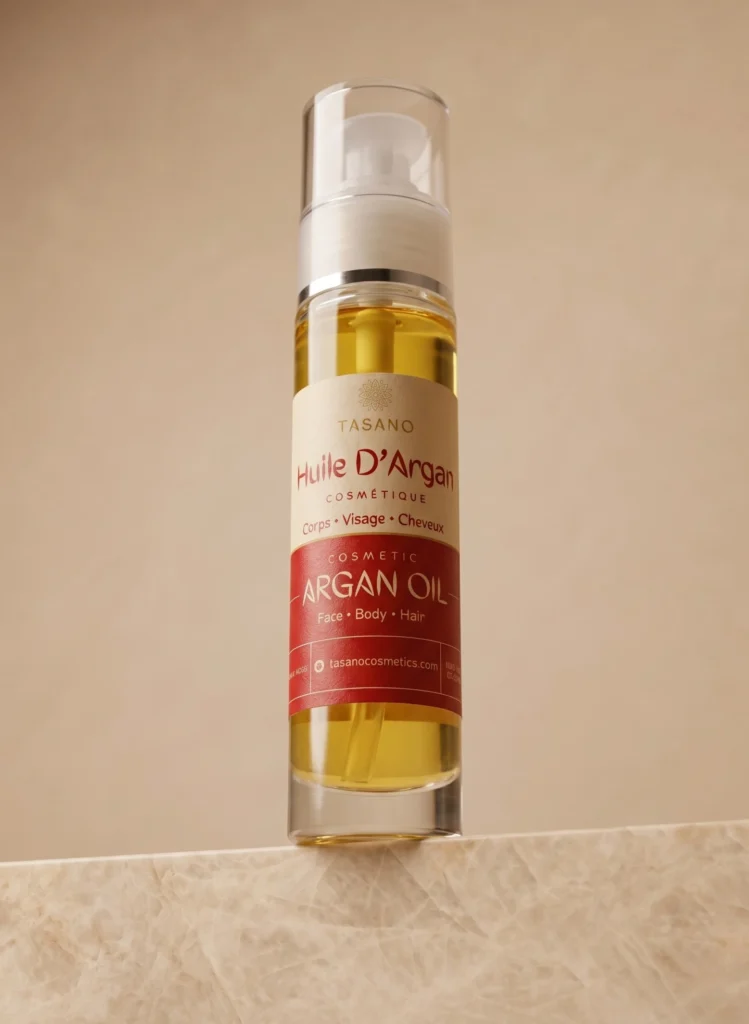
100% Pure Moroccan Argan Oil
Price range: $ 17.00 through $ 26.00 -
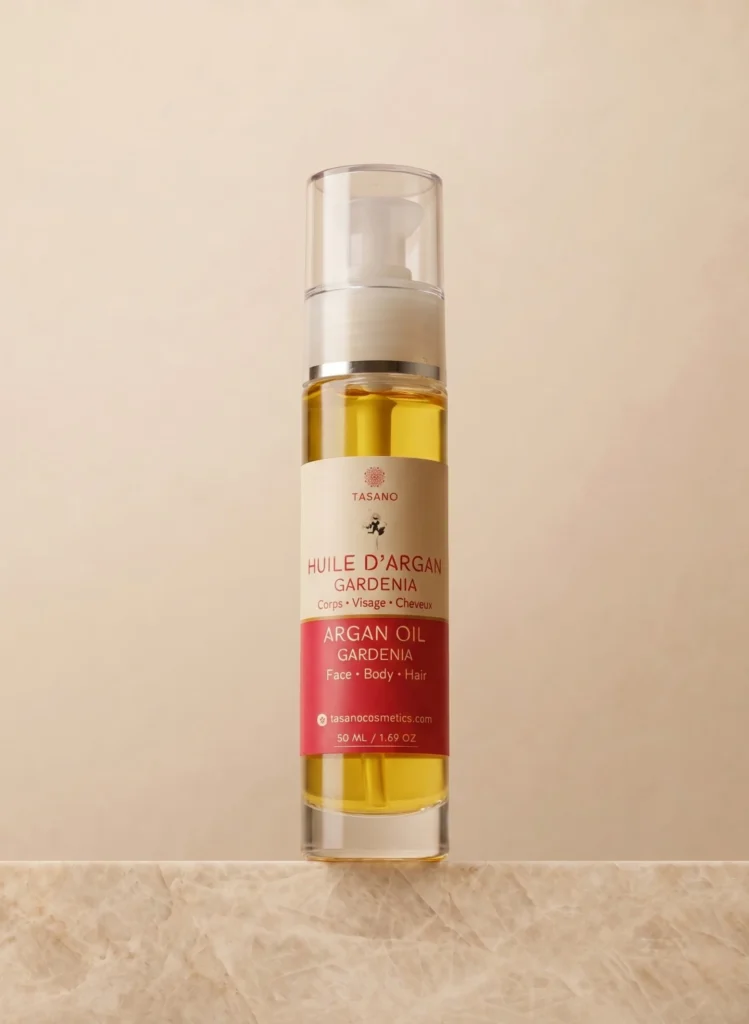
Gardenia Argan Oil for Hair & Body
$ 21.00 -
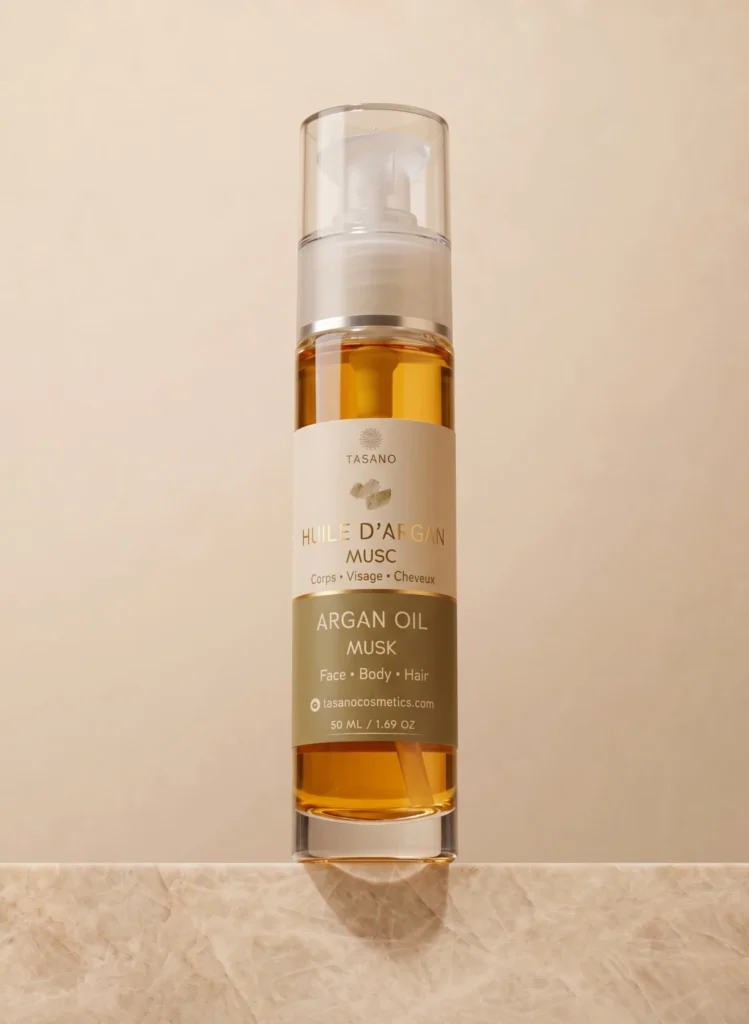
Musk Argan Oil for Hair & Body
$ 21.00 -
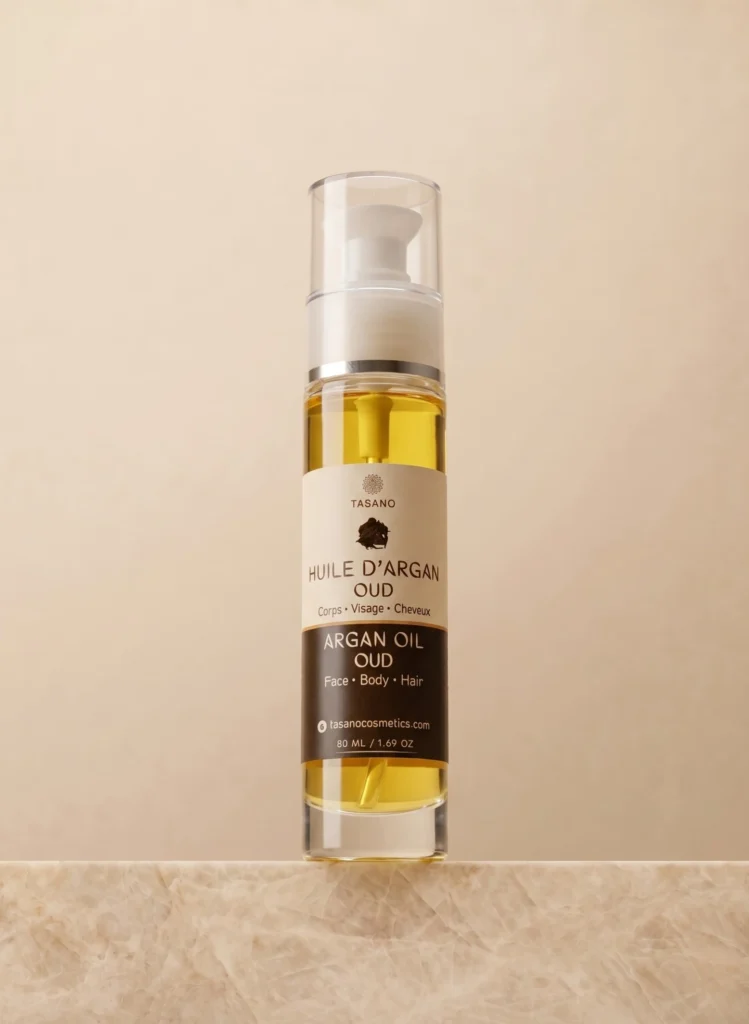
Oud Argan Oil for Hair & Body
$ 21.00
Frequently Asked Questions About Argan Oil After Shower
Is Argan oil after shower good for hair ?
Yes. It is commonly used after washing to help reduce frizz, add shine, and improve softness, especially on dry or textured hair.
Should I apply Argan oil to wet or dry hair?
Both can work, but many people prefer damp hair because a small amount spreads more evenly and helps tame frizz. AAD and Cleveland Clinic both describe argan oil as a useful lightweight conditioning aid.
Can Argan oil replace body lotion after shower?
It can work beautifully on its own for many people, especially if applied to slightly damp skin. Those with very dry skin may prefer layering it with a moisturizer underneath.
Does Argan oil help with frizz?
Yes. This is one of its best-known cosmetic benefits for hair.
Is Argan oil a carrier oil?
Yes. Argan oil is considered a carrier oil, meaning it can be used on its own or to dilute essential oils. It is rich in fatty acids and vitamin E, which makes it suitable for direct application to the skin and hair.
Is Argan oil natural?
Yes. Pure argan oil is a natural oil extracted from the kernels of the argan tree, native to Morocco. High-quality versions are minimally processed to preserve their beneficial properties.
Is Argan oil an essential oil?
No. Argan oil is not an essential oil.
Essential oils are highly concentrated plant extracts, while argan oil is a carrier oil that can be applied directly to the skin and hair without dilution.
Is Argan oil sulfate free?
Yes. Argan oil is naturally sulfate-free, as it is not a cleansing product but a pure oil. Sulfates are typically found in shampoos and cleansers, not in oils.
Is Argan oil good for skin?
Yes. Argan oil is known for its moisturizing and softening properties. It helps support the skin barrier, improve texture, and maintain hydration when used regularly.
Is Argan oil good for your face?
Yes, when used in small amounts.
Argan oil is lightweight and can be suitable for facial use, helping to hydrate and soften the skin without leaving a heavy residue.
Is Argan oil good for low porosity hair?
It can be, when used sparingly.
Low porosity hair tends to resist heavy products, so applying a small amount of argan oil to the ends can help add softness without weighing the hair down.
Is Argan oil comedogenic?
Argan oil is considered low on the comedogenic scale, meaning it is unlikely to clog pores for most skin types. However, individual reactions can vary, so it is always best to start with a small amount.
Is Argan oil good for hair growth?
Argan oil does not directly stimulate hair growth, but it supports a healthy scalp and helps reduce breakage, which can contribute to healthier-looking, stronger hair over time.
Can Argan oil cause hair loss?
No. Argan oil does not cause hair loss.
In fact, it is often used to improve hair condition and reduce breakage. However, excessive buildup or improper use on the scalp may not suit everyone.
Can Argan oil be used as a heat protectant?
Argan oil can provide a light protective layer on the hair, helping reduce dryness from heat styling. However, it is not a dedicated heat protectant and should be used in moderation before heat exposure.
Final Thoughts: The Finishing Touch That Brings Everything Together
Argan oil is more than a traditional ingredient. After hammam, it becomes the step that restores softness, comfort, and balance.
When used after cleansing and exfoliation, it helps the ritual feel complete:
- skin feels smoother and more supple
- hair feels softer and more polished
- the overall result feels nourished, not stripped
That is why it has remained such an important part of Moroccan beauty care. It is simple, effective, and deeply connected to the rhythm of the ritual itself.
For anyone seeking a more refined post-hammam routine, argan oil is not an afterthought. It is the finish that elevates the entire experience.
Enjoyed this guide? Keep TASANO easier to find when you search for Moroccan beauty advice.
