

Can Argan Oil Help with Dandruff? Benefits, Limits and How to Use It
ByTASANO
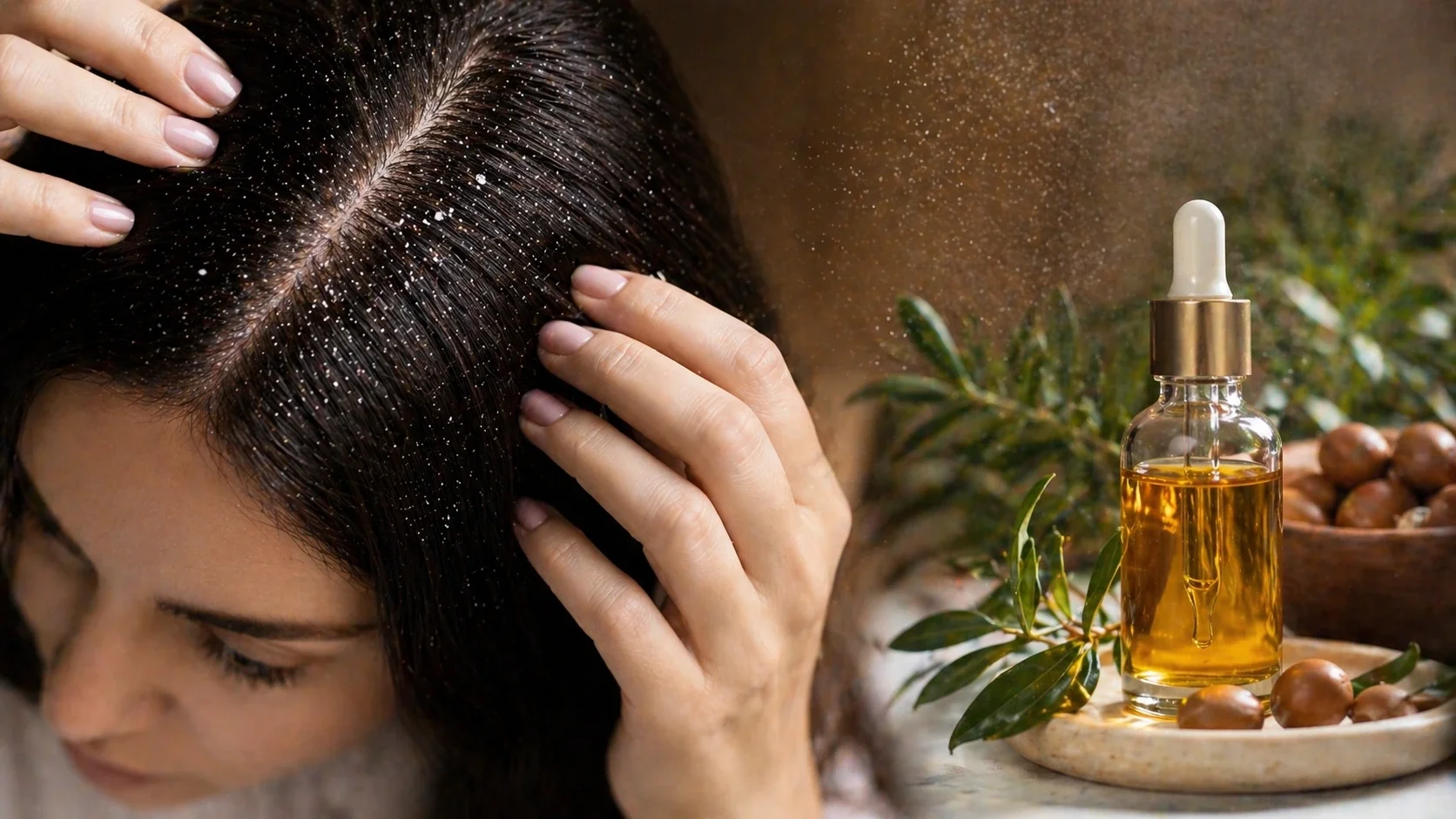
Argan oil for dandruff is one of the most searched natural remedies, but most advice around it is vague, misleading, or simply wrong. Not all flakes are the same, and using argan oil for dandruff without understanding the root cause can either help your scalp or make the situation worse.
Argan oil for dandruff works only in specific cases. It can improve comfort when the scalp is dry, tight, and lacking moisture. But when flakes come from true dandruff or seborrheic dermatitis, adding oil does not fix the underlying issue and may even increase buildup.
That is where most people go wrong. They see flakes and assume dryness, then apply oil heavily and expect results. In reality, dandruff is often linked to scalp imbalance, excess oil, or microbial factors, not a lack of oil.
Understanding when argan oil for dandruff makes sense is the difference between a calmer, healthier scalp and a cycle of persistent flakes that never fully go away.
For the complete hair and scalp system, read Moroccan Hair Care: The Complete Guide to Stronger, Healthier, Shinier Hair.
Table of Contents
Dry Scalp vs Dandruff: Know the Difference First
Before using argan oil for dandruff, you need to identify what type of flaking you actually have. Treating dry scalp and dandruff the same way is one of the biggest mistakes in hair care.
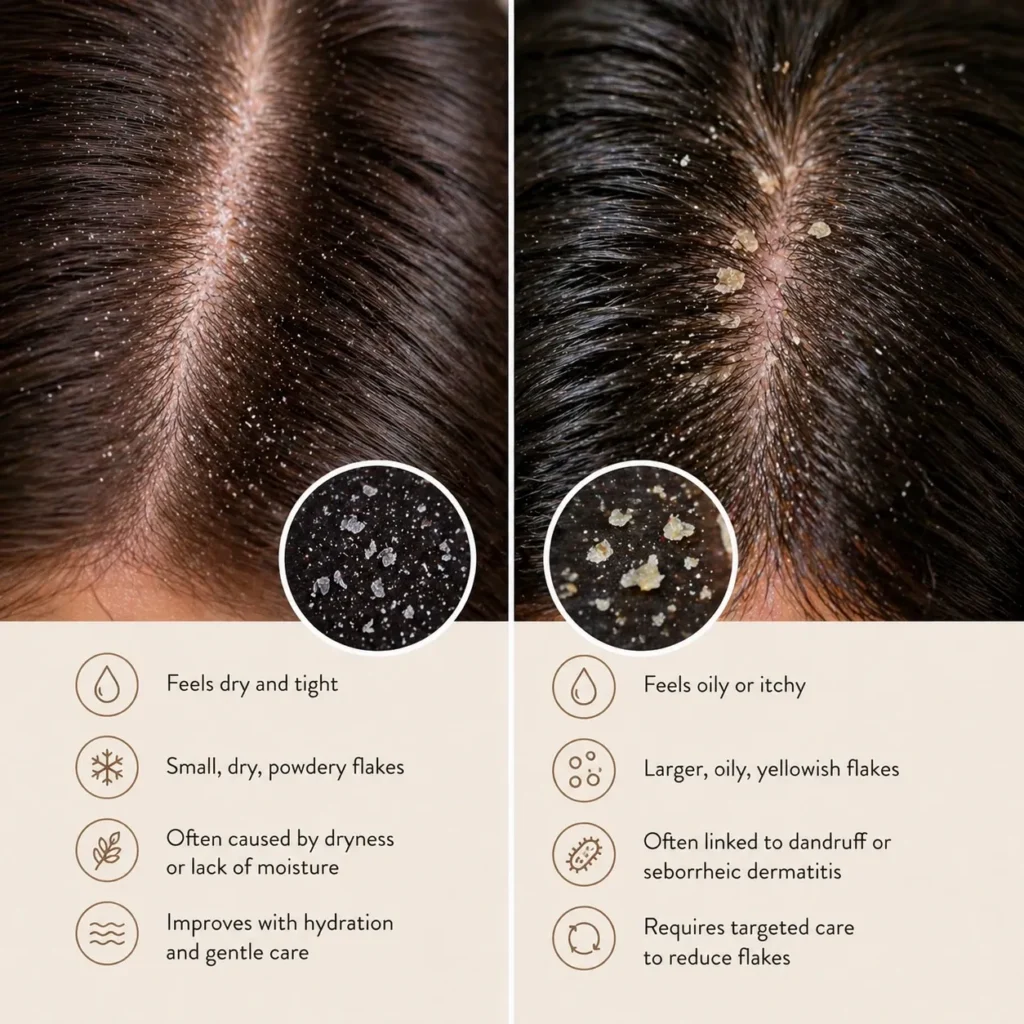
Dry scalp is usually a moisture problem. The skin feels tight, sometimes slightly itchy, and produces small, dry, powdery flakes. This is where argan oil for dandruff may actually help, because the scalp is lacking softness and needs gentle nourishment.
Dandruff is different. It is often associated with seborrheic dermatitis, which involves an imbalance on the scalp. Flakes tend to be larger, sometimes oily, and may appear white or yellowish. The scalp may feel itchy, irritated, or even greasy rather than dry.
Here is a simple way to distinguish them:
- Dry scalp: small flakes, dry feeling, tightness, improves with moisture
- Dandruff: larger flakes, oily or sticky texture, recurring, linked to scalp imbalance
Argan oil for dandruff should only be used when the signs clearly point toward dryness. If the scalp already produces excess oil or buildup, adding more oil does not correct the problem.
For a deeper breakdown of scalp behavior and oil use, read Argan Oil for Scalp: Dry Scalp, Dandruff and Scalp Care Benefits.
Can Argan Oil Help with Dandruff?
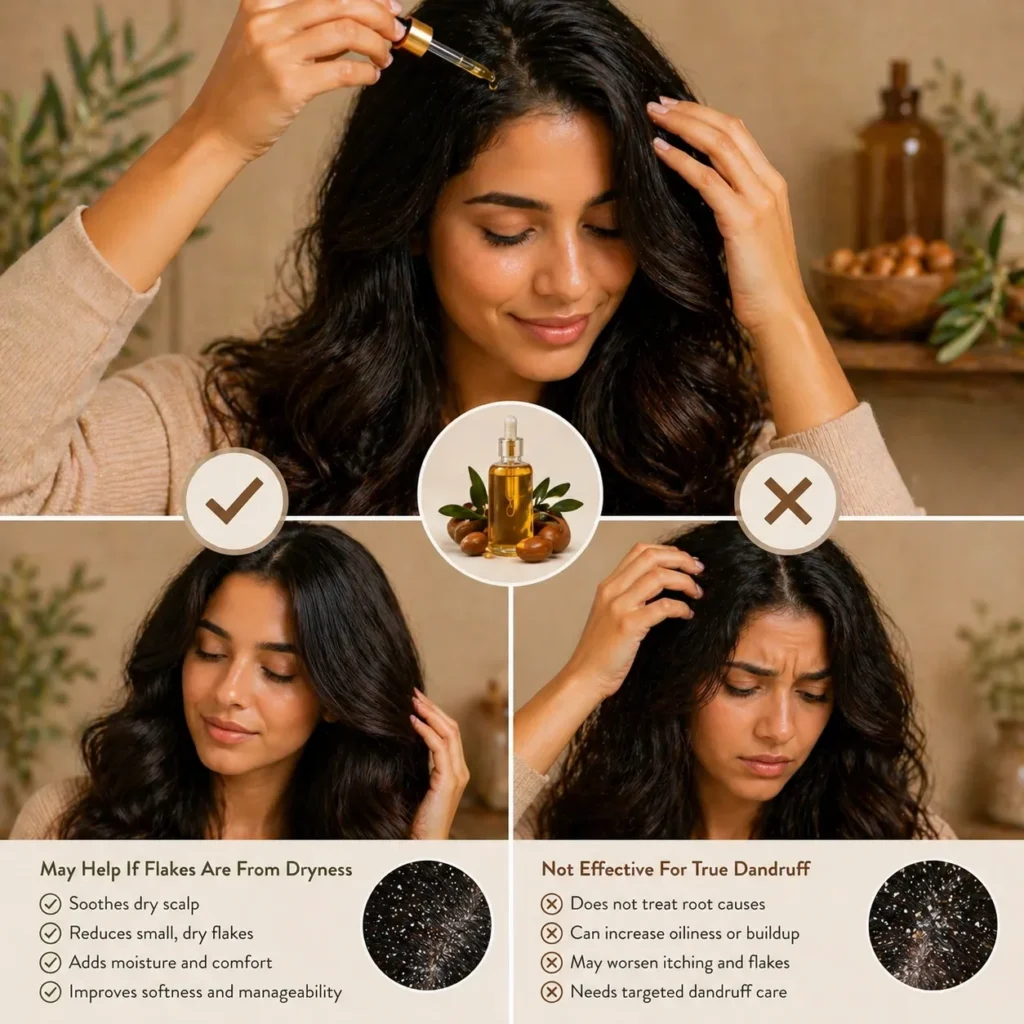
Argan oil for dandruff can help, but only when dandruff is not truly dandruff.
If the flakes are caused by dryness, argan oil for dandruff can improve comfort, soften the scalp, and reduce the visible flaking that comes from lack of moisture. In this case, it acts as a supportive step that makes the scalp feel less tight and the hair look healthier.
But if the flakes are linked to seborrheic dermatitis or true dandruff, argan oil for dandruff is not a treatment. It does not target the underlying causes of dandruff, such as scalp imbalance, excess oil activity, or the factors that lead to persistent flaking.
This is where precision matters. Using argan oil for dandruff in the wrong situation can create a heavier scalp environment, increase buildup, and make flakes appear worse instead of better.
The correct way to think about it is simple:
- Argan oil for dandruff can support dry scalp comfort
- Argan oil for dandruff cannot replace dandruff treatment
- Argan oil for dandruff works best as a controlled, short application, not a heavy routine
When used correctly, argan oil becomes a refinement tool, not a cure. It helps when dryness is the issue, but it should never be forced into roles it was not designed to solve.
5 Honest Truths About Argan Oil for Dandruff
1. Argan Oil Can Help Dry Flakes, Not Every Type of Flake
If your scalp feels dry, tight, and slightly flaky, argan oil may help because the issue is likely moisture-related. A few drops used as a pre-wash scalp treatment can soften the skin and reduce that rough, dry feeling.
But flakes are not always dryness. If the flakes are oily, yellowish, sticky, or come with redness and persistent itch, you may be dealing with dandruff or seborrheic dermatitis instead. That needs a different approach.
2. Argan Oil Is Not an Anti-Dandruff Active
This is important: argan oil is not the same as ketoconazole, selenium sulfide, zinc pyrithione, salicylic acid, or other anti-dandruff ingredients.
Those ingredients are used because dandruff often needs antifungal, exfoliating, or medicated support. Cleveland Clinic notes that persistent dandruff is commonly treated with over-the-counter anti-dandruff shampoos, and resistant cases may require antifungal options such as ketoconazole.
Argan oil can support comfort, but it should not be presented as a dandruff medication.
3. Argan Oil Can Make Some Dandruff Worse
This is where weak beauty advice becomes dangerous.
If your dandruff is linked to an oily scalp or seborrheic dermatitis, adding oil may increase buildup or make the scalp feel heavier. The issue is not that argan oil is “bad.” The issue is that the wrong treatment for the wrong scalp problem can backfire.
If your flakes get worse after applying oil, stop using it on the scalp. That is a signal, not something to push through.
4. Argan Oil Works Best as a Short Pre-Wash Treatment
If you want to try argan oil for dandruff-like flakes, use it carefully.
The safest method is a short pre-wash treatment. Apply a small amount to dry areas, leave it for 20 to 30 minutes, then wash the scalp properly. This gives the scalp comfort without leaving oil sitting there for too long.
Do not flood the scalp. Do not sleep with heavy oil on the scalp if you are prone to dandruff, greasiness, or buildup.
5. The Best Routine Depends on the Cause
The right routine depends on what your scalp is actually doing.
If your scalp is dry, tight, and powdery-flaky, argan oil may fit. If your scalp is oily, itchy, inflamed, or covered with larger flakes, focus on dandruff care first. The American Academy of Dermatology recommends choosing dandruff shampoos based on active ingredients and trying different options if one does not work.
Scalp care also connects with cleansing traditions like The Complete Moroccan Hammam Ritual at Home.
When Argan Oil for Dandruff Makes Sense
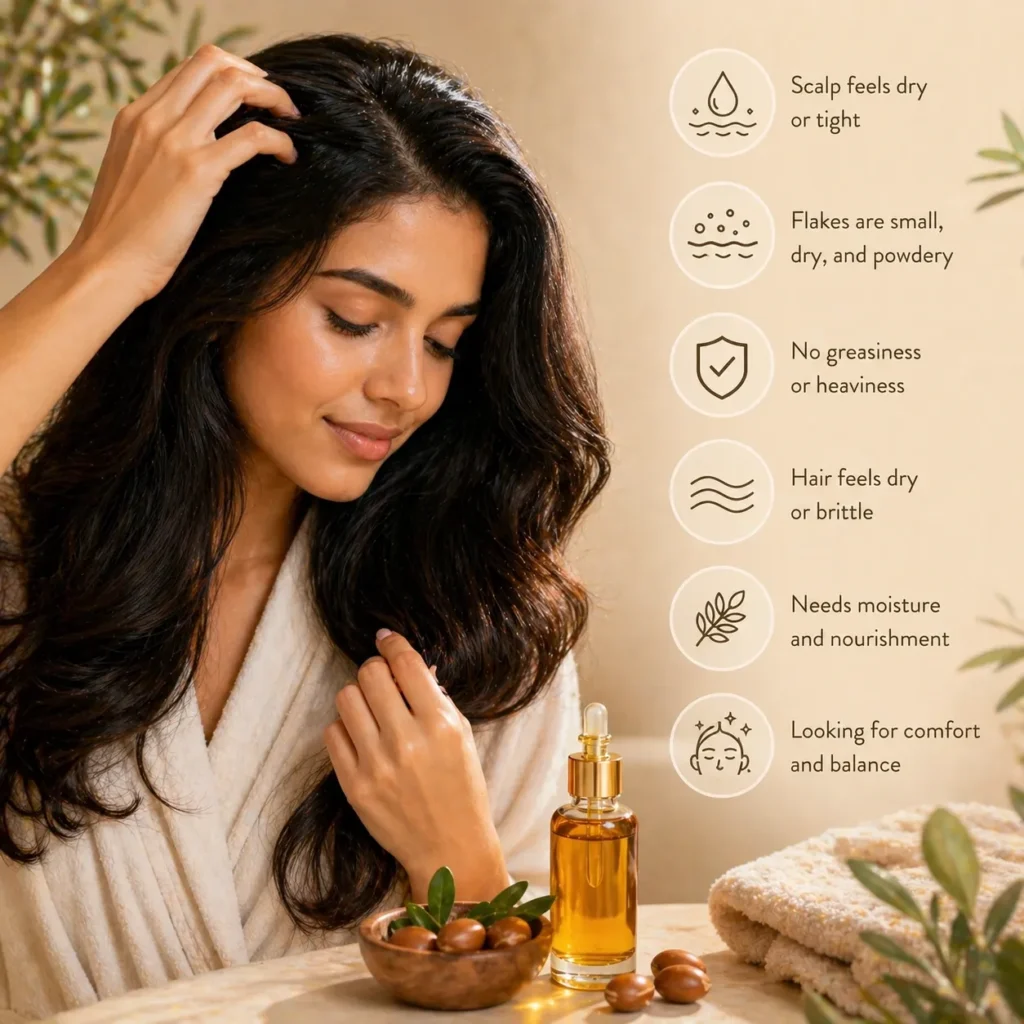
Argan oil for dandruff makes sense only when the flakes are likely caused by dryness.
It may be a good fit if:
- your scalp feels tight after washing
- your flakes are small, dry, and powdery
- your scalp does not feel greasy
- your skin feels dry in other areas too
- your shampoo feels too stripping
- your scalp feels uncomfortable but not inflamed
In this case, argan oil can be used as a comfort step. It helps soften the scalp and reduce the dry feeling that can make flaking more noticeable.
When You Should Not Use Argan Oil for Dandruff
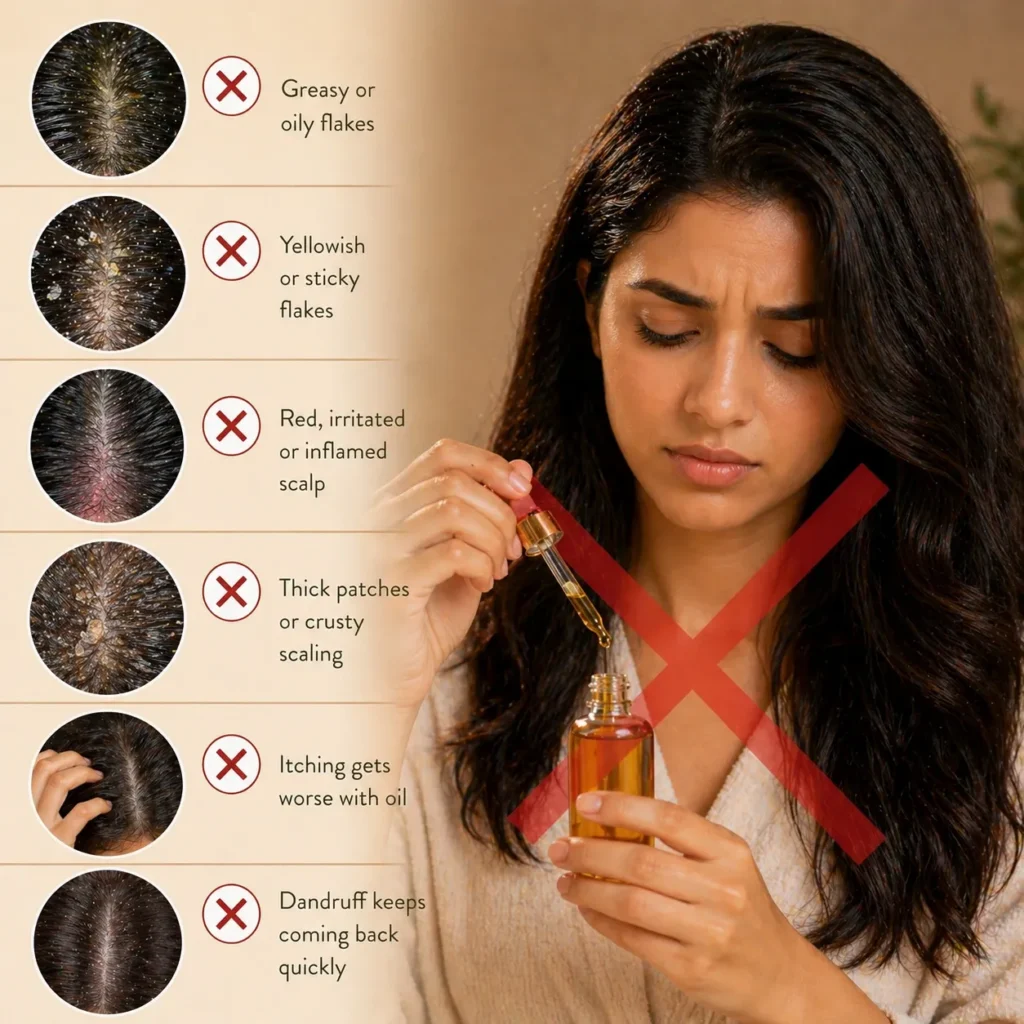
Skip argan oil on the scalp if:
- your flakes are greasy or yellowish
- your scalp feels oily
- your dandruff keeps coming back quickly
- your scalp is red, irritated, or inflamed
- you have thick patches or crusty scaling
- oil makes the itch worse
- you suspect seborrheic dermatitis
Mayo Clinic describes seborrheic dermatitis as involving greasy patches with flaky white or yellow scales, and the AAD notes that dandruff shampoo may be enough for mild to moderate scalp seborrheic dermatitis. Those are not situations where you should rely on argan oil alone.
How to Use Argan Oil for Dry Flakes Safely
Step 1: Start with a tiny amount
Use a few drops only. Apply them to the dry areas of the scalp, not the whole head.
Step 2: Massage gently
Use fingertips, not nails. Scratching makes irritation worse and can damage the scalp.
Step 3: Leave it for 20 to 30 minutes
Keep it short at first. This helps you test how your scalp reacts.
Step 4: Wash properly
Use a gentle shampoo if the issue is dryness. Use a dandruff shampoo if your flakes are true dandruff.
Step 5: Watch the reaction
If your scalp feels calmer, argan oil may be useful for your dry scalp routine. If flakes, itch, or greasiness increase, stop using oil on the scalp.
For pure oil selection, read How to Choose Pure Argan Oil for Hair and Avoid Fake Moroccan Oil Blends.
Argan Oil vs Dandruff Shampoo
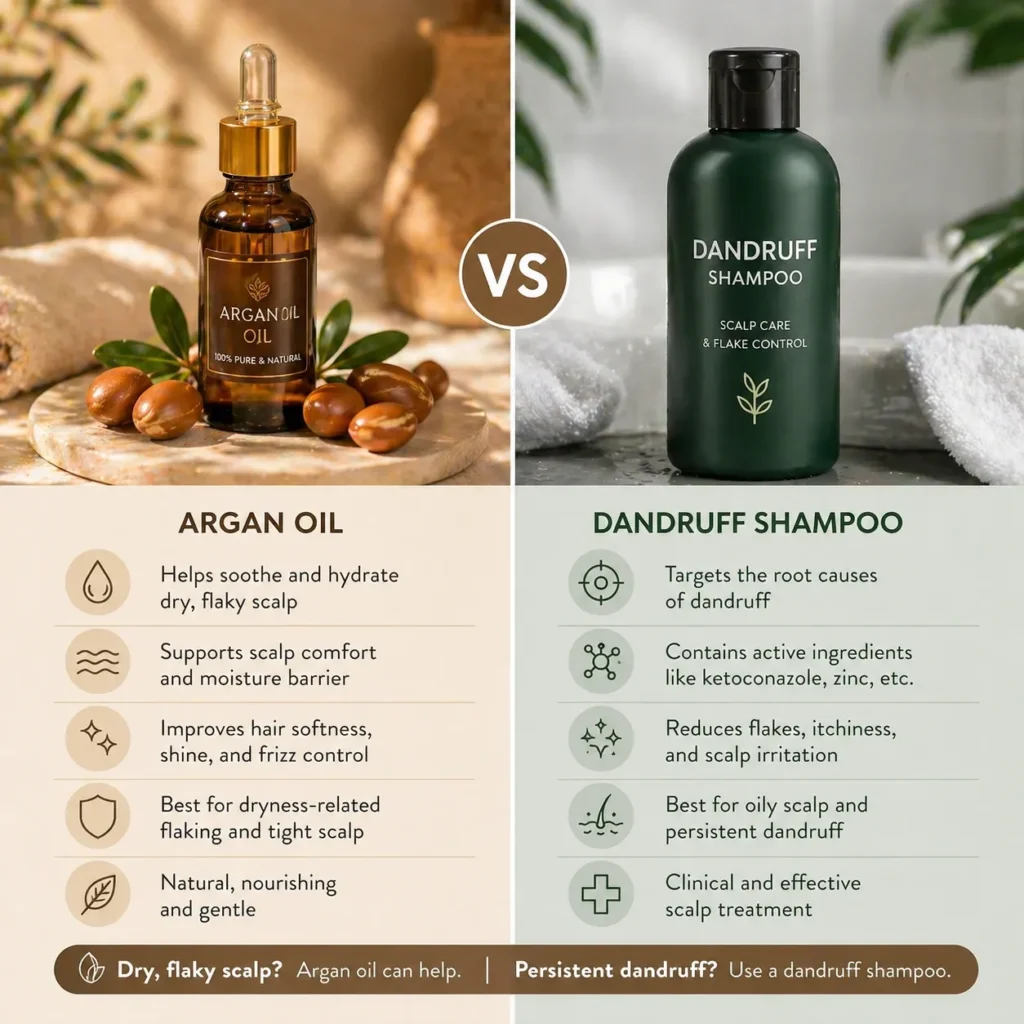
Argan oil and dandruff shampoo do different jobs.
Argan oil helps soften and comfort dry-feeling skin. Dandruff shampoo targets dandruff triggers more directly. The AAD explains that dandruff shampoos contain different active ingredients designed to treat itch, rash, flaking, scales, and irritation.
Use this simple rule:
- Dry, tight scalp: argan oil may help as a comfort step
- Oily flakes or true dandruff: dandruff shampoo is usually the smarter first step
- Persistent scalp problems: see a dermatologist
Argan oil is a support tool. Dandruff shampoo is the treatment tool when dandruff is the real issue.
Can Argan Oil Help an Itchy Scalp?
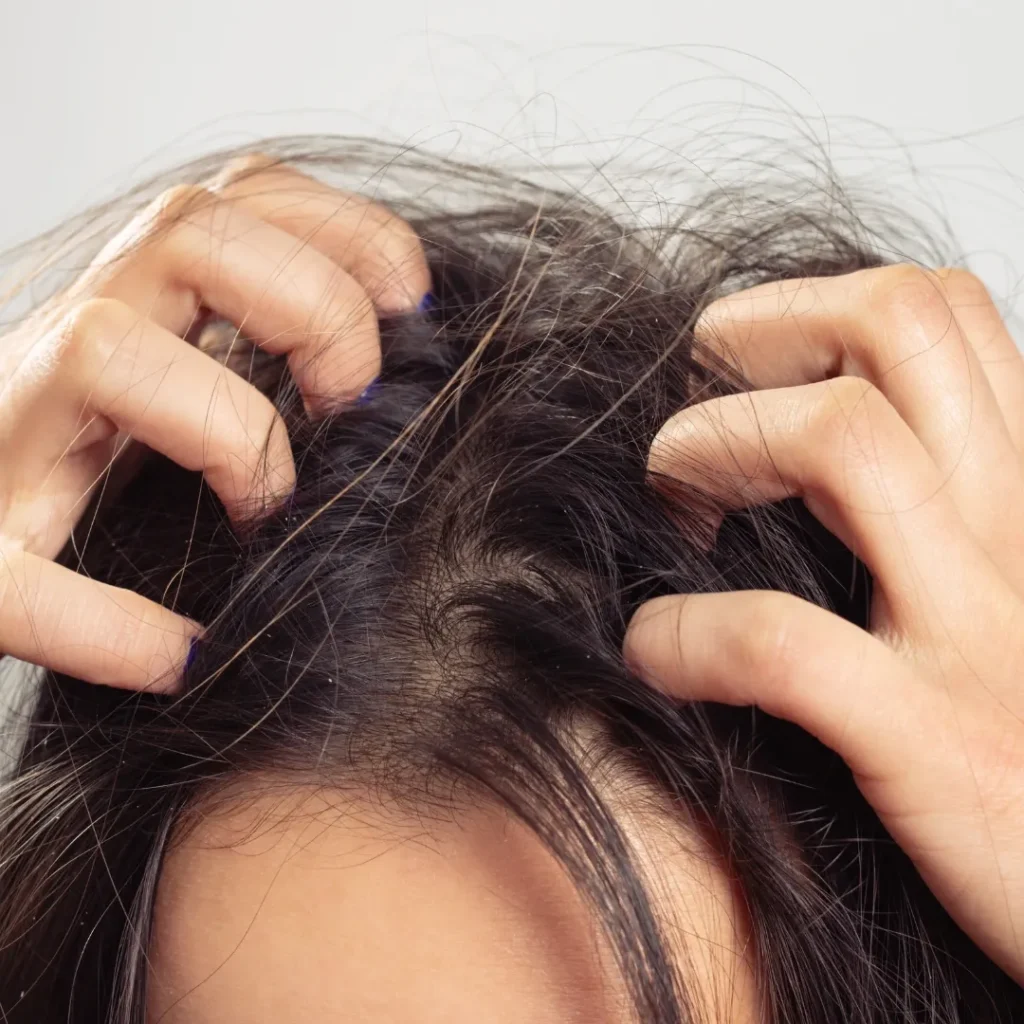
Sometimes.
If the itch comes from dryness, argan oil may help soften the scalp and reduce the tight, uncomfortable feeling. If the itch comes from dandruff, seborrheic dermatitis, buildup, or inflammation, oil may not help.
Cleveland Clinic lists itchy skin among seborrheic dermatitis symptoms, and Mayo Clinic also identifies itchiness as a symptom. That means itch alone is not enough to diagnose dryness.
If your scalp is itchy and dry, argan oil may be useful. If your scalp is itchy and greasy, argan oil is probably not the first move.
What About Argan Oil for Hair Lengths If You Have Dandruff?
Even if argan oil is not right for your scalp, it can still be excellent for the hair lengths.
People with dandruff can still have dry, frizzy, or rough hair. In that case, keep argan oil away from the scalp and use it on the mid-lengths and ends instead.
This gives you the softness, shine, and frizz-control benefits without adding oil to a scalp that may already be struggling.
For this use case, read Argan Oil for Dry Hair: How to Use It for Frizz, Shine and Softness.
Argan Oil for Dandruff Backed by Better Scalp Guidance
Argan oil for dandruff only makes sense when the flakes are dryness-related. The American Academy of Dermatology explains that dandruff shampoos can treat mild to moderate seborrheic dermatitis on the scalp, while Mayo Clinic lists medicated shampoos, creams, and lotions as main treatments for seborrheic dermatitis.
The Cleveland Clinic describes seborrheic dermatitis symptoms as including dry or greasy scalp scaling, white to yellow flaking, and itchiness. Together, these sources support a clear conclusion: argan oil may help dry scalp comfort, but true dandruff usually needs targeted dandruff care, not blind scalp oiling.
Choosing Authentic Argan Oil for Scalp Comfort
If you use argan oil on the scalp, quality matters. A scalp that is already dry or uncomfortable does not need vague blends, heavy fragrance, or filler-heavy formulas.
Look for:
- clear ingredient transparency
- pure argan oil or clearly argan-rich formulas
- a fresh, clean texture
- no excessive perfume
- proper storage away from direct heat and sunlight
For readers who want confidence in what they are applying, TASANO’s 100% Pure Moroccan Argan Oil offers an authentic Moroccan option for dry scalp comfort, soft hair lengths, and traditional beauty rituals.
Use it where it belongs: lightly, carefully, and mainly when dryness is the real problem.
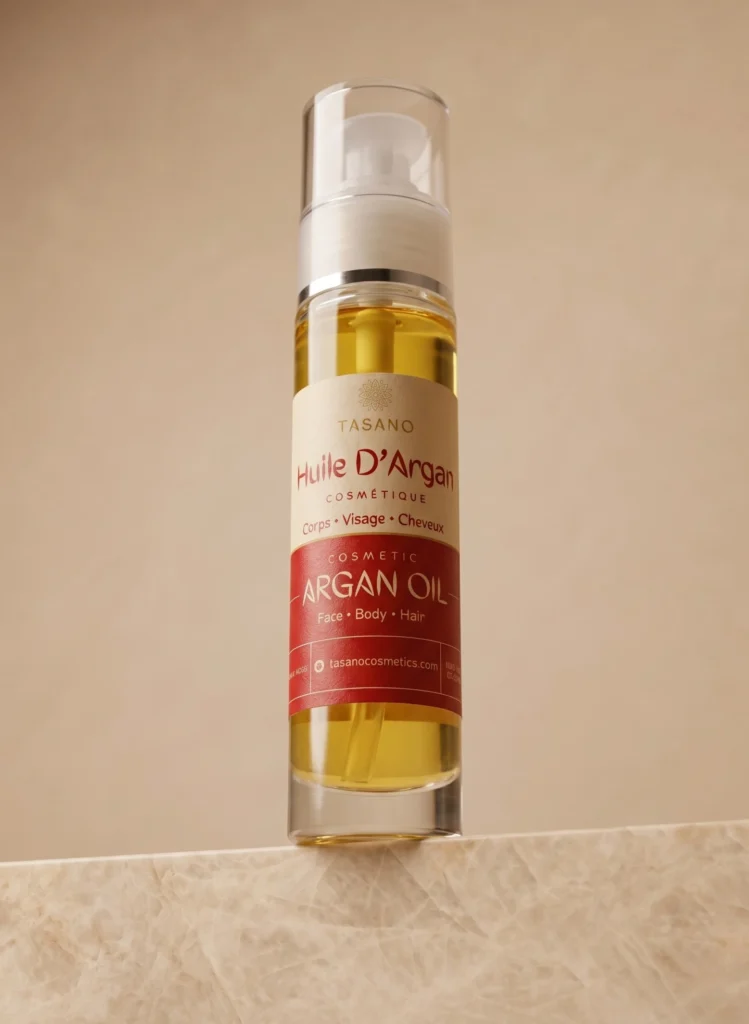
100% Pure Moroccan Argan Oil
A lightweight, cold-pressed Moroccan argan oil for face, hair, body, nails, and beard care. Designed to soften dry-feeling skin, smooth the look of frizz, nourish dry ends, and leave a clean satin glow.
- 100% pure single-ingredient formula
- For face, hair, body, nails, and beard care
- No added fragrance, silicones, filler oils, or mineral oil
FAQ
Can argan oil help with dandruff?
Argan oil may help if your flakes are caused by dry scalp, but it is not a true dandruff treatment. If the flakes are oily, yellowish, stubborn, or linked to seborrheic dermatitis, a dandruff shampoo is usually more appropriate.
Is argan oil good for dry scalp?
Yes, argan oil can be good for dry scalp when used lightly. It can soften dry-feeling skin and reduce tightness.
Can argan oil make dandruff worse?
Yes, it can make some dandruff worse if the issue is oily scalp, buildup, or seborrheic dermatitis. If flakes or itching increase after applying oil, stop using it on the scalp.
How do you use argan oil for dandruff?
Use a small amount only on dry areas, leave it for 20 to 30 minutes, then wash it out. Do not use heavy oiling if your scalp is oily or inflamed.
Is argan oil better than dandruff shampoo?
No. Argan oil can support dry scalp comfort, but dandruff shampoo is usually better for true dandruff. The AAD states that dandruff shampoos can treat mild to moderate seborrheic dermatitis on the scalp.
Should I leave argan oil on my scalp overnight?
Not if you are prone to dandruff, greasiness, or buildup. A short pre-wash treatment is safer.
What is the best oil for dandruff?
For true dandruff, oil is usually not the best first answer. A targeted dandruff shampoo is usually more reliable. Oils may help only when dryness is the real cause of flaking.
Final Thoughts
Argan oil for dandruff can be useful, but only when it is used with precision and for the right reason. It is not a universal fix for flakes, and treating it like one is exactly why many people see no results.
If your scalp is dry, tight, and producing small, powdery flakes, argan oil for dandruff can help restore comfort, soften the skin, and reduce the visible dryness that makes flaking more noticeable. In this case, it works as a supportive step that improves how the scalp feels and how the hair looks.
If your scalp is oily, itchy, or dealing with persistent flakes, argan oil for dandruff is not the solution. True dandruff requires targeted care, not additional oil. Using argan oil for dandruff in that situation can increase buildup, weigh the scalp down, and make the problem harder to control.
The difference is not the product. It is the diagnosis.
Use argan oil for dandruff when dryness is the clear cause. Keep the application light, controlled, and short. Avoid heavy or repeated oiling if the scalp does not respond well. Pay attention to how your scalp reacts and adjust accordingly.
That is how argan oil for dandruff becomes a smart addition to your routine instead of a misplaced solution that holds your results back.
Recommended products
-
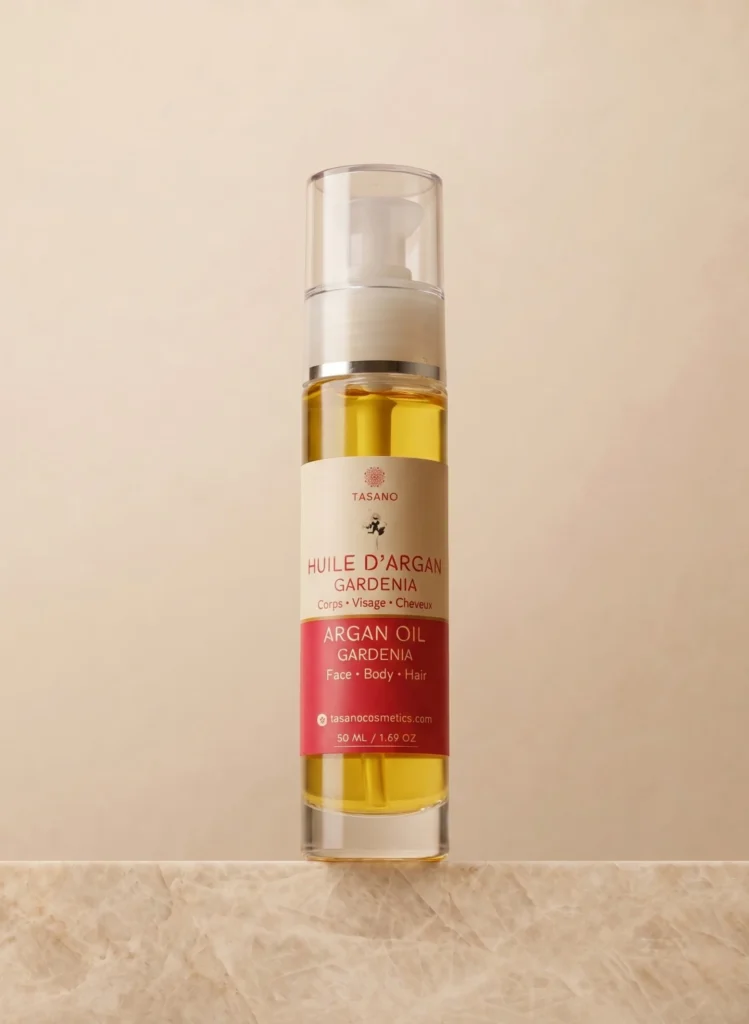
Gardenia Argan Oil for Hair & Body
$ 21.00 -
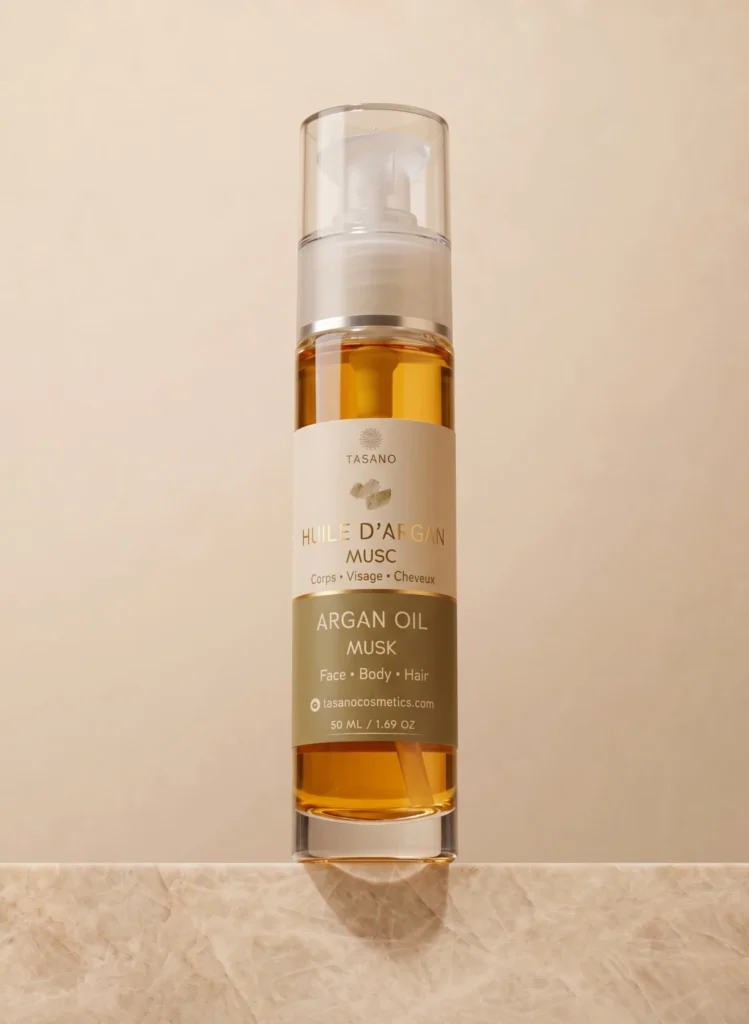
Musk Argan Oil for Hair & Body
$ 21.00 -
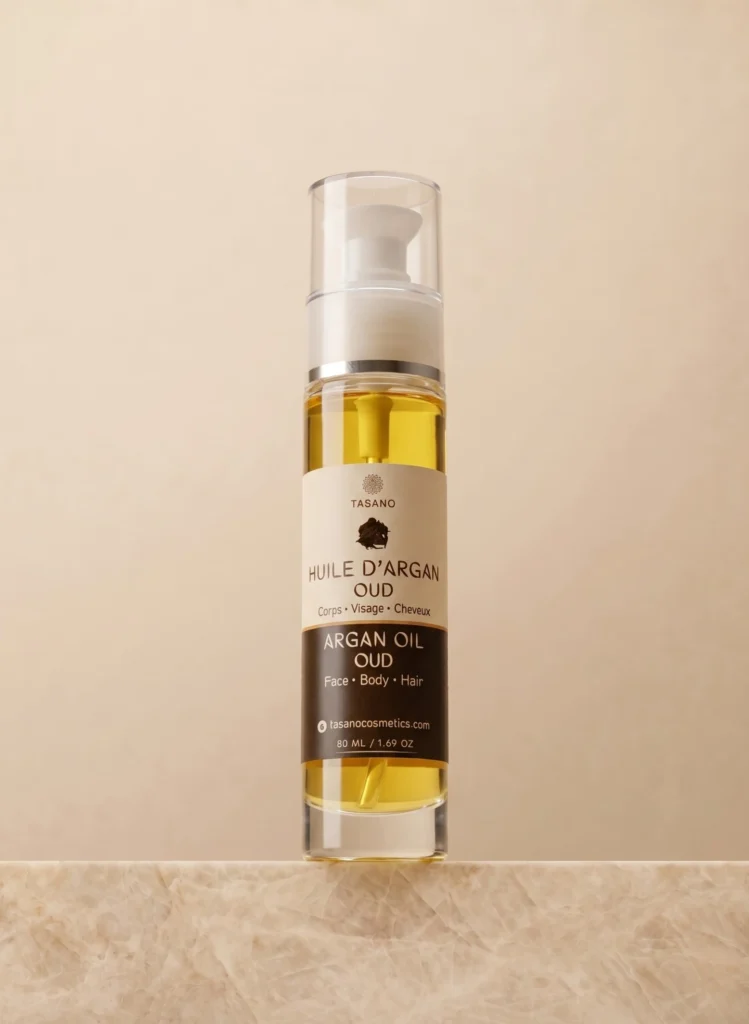
Oud Argan Oil for Hair & Body
$ 21.00 -
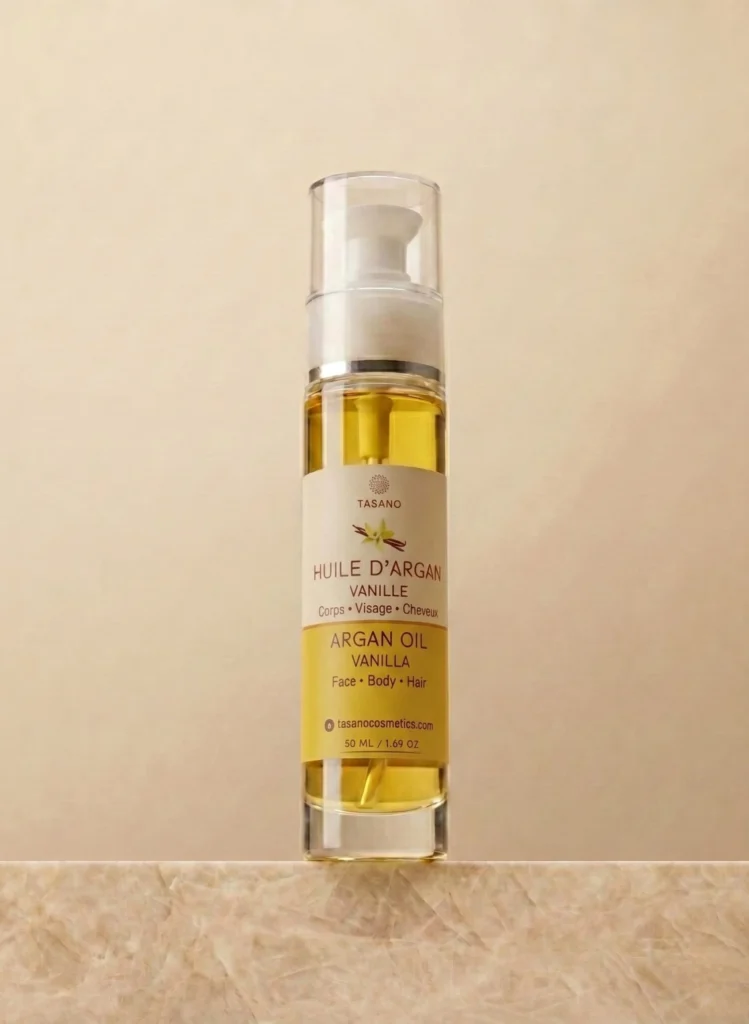
Vanilla Argan Oil for Hair & Body
$ 20.00
Enjoyed this guide? Keep TASANO easier to find when you search for Moroccan beauty advice.
